
Stroke Rehab in Daily Life: Why Summer Routines Still Matter
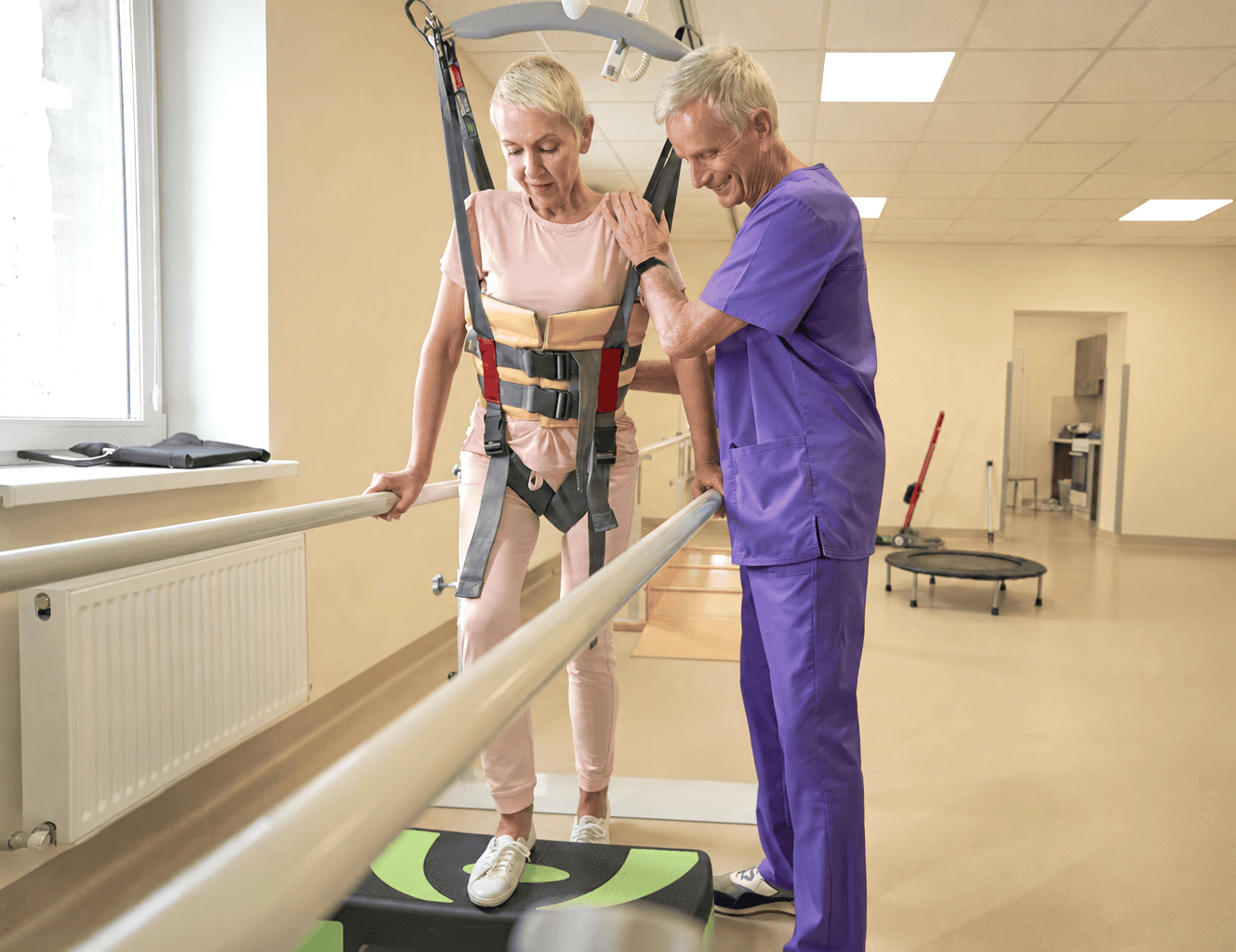
Ninety-four degrees outside and someone’s grandmother is refusing to do her hand exercises because the air conditioning in the therapy gym feels different than her living room. Small thing. Except it isn’t, not really — routine after a stroke lives or dies on details exactly that petty.
Recovery doesn’t pause for July. Neuroplasticity, the brain’s capacity to reroute function around damaged tissue, depends on repetition, and repetition doesn’t care whether it’s ninety degrees or thirty. Skip three weeks of practice because the pool schedule changed or a grandchild’s visiting from out of town, and measurable ground gets lost. Clinicians who track stroke rehab daily living outcomes will tell you plateaus rarely come from the injury itself. They come from interrupted practice.
What Stroke Rehab Daily Living Actually Requires
A patient at New Paltz Center spent four sessions this spring just working a shirt button between thumb and forefinger. Forty attempts, maybe fifty, before the motion stopped requiring visible concentration. Occupational therapy runs on that kind of narrow repetition — a shirt, a transfer out of bed, a knife dragged through a piece of bread — because motor pathways rebuild through specific, repeated motion and nothing shortcuts it. Six months after discharge, a meaningful share of stroke patients, somewhere in the thirty-to-forty percent range by most tracking, are still short of where they were on ordinary tasks. Nobody’s failing. The clock on this runs longer than people expect walking in.
July does something specific to a rehab calendar. A wedding upstate pulls a family out for a long weekend. A window unit hums loud enough that a cue from a speech therapist doesn’t land the way it would in October. Small stuff, individually. Add it up across six or eight weeks and a patient who was climbing steadily starts flattening out, and half the time nobody can point to why.
Longer days change balance work too, usually not for the better. More daylight means more hours spent outside — a deck, a lawn with a slope nobody notices until someone’s navigating it post-stroke without the mats or the spotter a gym floor provides. Fall numbers tick up through the summer months. Almost always it registers after the fact, as an ER trip, not before.
Holding a Routine Together in July and August
The stroke rehab daily living plans that hold up under summer conditions tend to share a few features. They’re specific rather than general — “practice buttoning three shirts before lunch” beats “work on fine motor skills.” They’re scheduled at consistent times, ideally when a patient is least fatigued, since post-stroke fatigue can wreck an afternoon session that would’ve gone fine at ten in the morning. And they build in redundancy: if the pool’s closed for maintenance, there’s a backup exercise ready, not a gap.
Cognitive rehab often gets sidelined in favor of the more visible physical gains — walking, gripping, standing unassisted — but attention, memory, and judgment are just as central to daily function. A speech-language pathologist working stroke recovery isn’t just addressing speech. Judgment about whether the stove is on. Memory for medication timing. These are quieter deficits, easier to miss, and they don’t improve on their own just because the physical side is progressing.
Family involvement matters more than most brochures let on. A spouse who understands why cutting vegetables is assigned as therapy — not busywork — reinforces the habit outside clinical hours. Left unexplained, it looks like an odd chore. Explained properly, it’s carryover, and carryover is where actual functional gains happen, not in the therapy gym itself.
Some of this fails anyway. A patient sails through gait training and then can’t manage a phone call because word-finding hasn’t caught up. Progress doesn’t arrive evenly across domains, and pretending it does sets everyone up for a bad week when the uneven parts show.
New Paltz Center’s Approach to Stroke Care and Short-Term Rehab
New Paltz Center runs stroke care and short-term rehab as connected pieces rather than separate tracks, which matters more than it might sound. A patient discharged from stroke care straight into a fragmented short-term rehab plan tends to lose the momentum built during the acute phase. New Paltz Center structures its programming so that occupational therapy, physical therapy, and daily living practice carry forward without that gap, alongside cardiac care, orthopedic care, pain management, wound care, and long-term care for patients whose needs extend further. For stroke recovery specifically, that continuity — same team, same goals, no restart — tends to be the difference between steady week-over-week gains and a recovery that stalls out waiting to regroup. More on their stroke and rehab services is available at New Paltz Center.
Care. Support. Positive Outcomes. Centers Health Care.
Centers Health Care runs rehabilitation, skilled nursing, and long-term care shaped around what a given patient needs — recovering from a stroke, working through a cardiac or orthopedic issue, or getting support a household can’t manage alone.
A patient at New Paltz Center might be aiming to walk back through his own front door. Another might just want to make coffee without spilling it, or stand at a sink unassisted for five minutes straight. Setbacks show up along the way, sometimes several in a row, sometimes with no clear trigger. Staff work toward whichever version of progress that particular patient is chasing.
Sometimes that progress arrives in large steps. More often it’s smaller than that. Either way, every step counts.
Steps to Home
Nobody hands a patient a map from hospital discharge back to running a household solo. What actually gets someone there: showing up in August heat, a spouse who gets why slicing a tomato counts as therapy and not a chore, and a team at New Paltz Center running stroke care and short-term rehab as one plan instead of two separate handoffs.
Our Steps to Home series follows patients through rehabilitation and the journey from hospital to home: