
What Families Should Know About Wound Care After a Hospital Stay
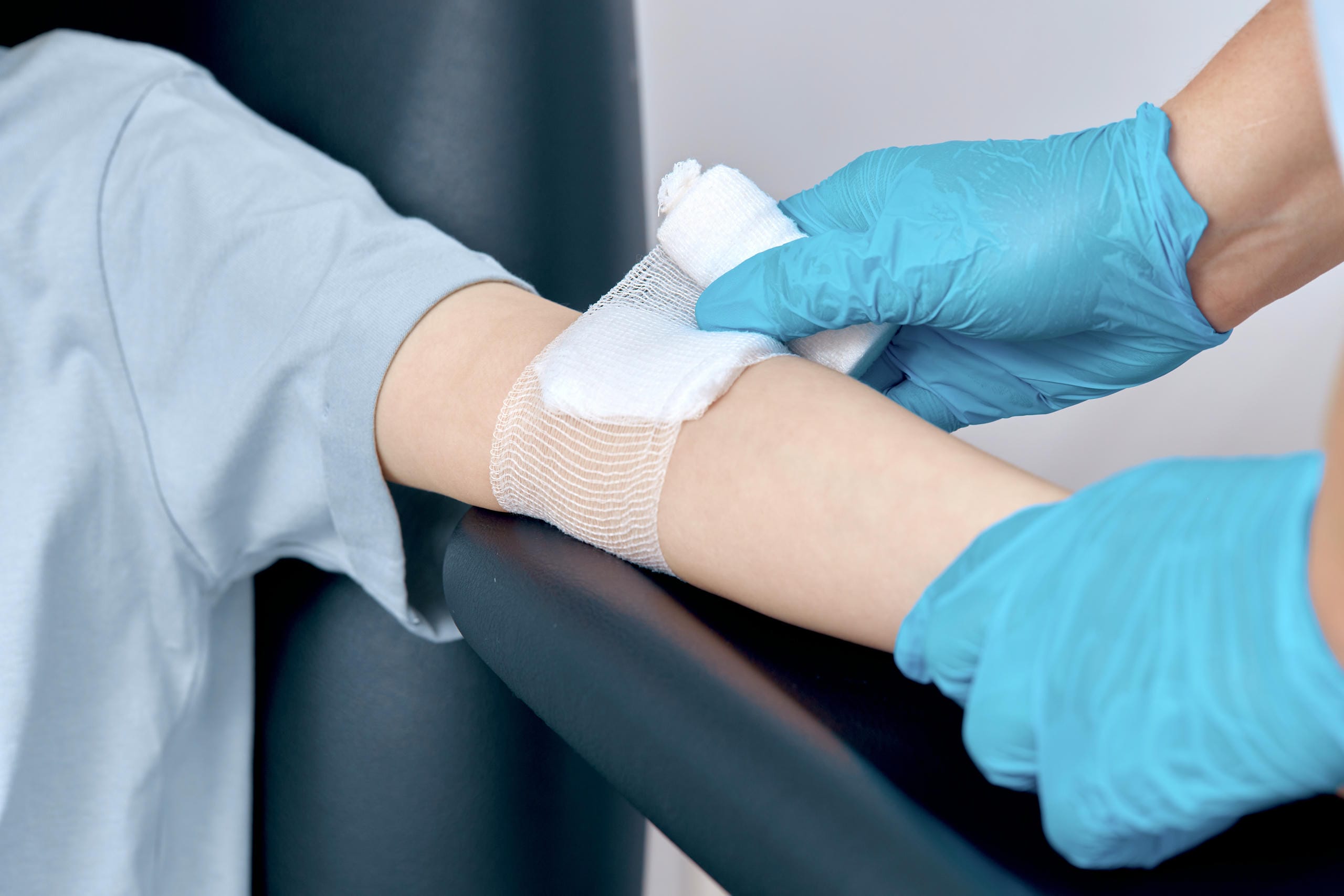
By six o’clock, somebody has emptied the hospital bag onto the kitchen table. Gauze. Tape. A cleanser with a label nobody remembers discussing. Dad is asking for coffee, and the family is holding up a bandage to the light because of one pale pink stain.
This is wound care after hospital stay in its least glamorous form. The patient is tired. Instructions that sounded obvious upstairs have become strangely vague at home. And “wound” can mean a stitched incision, a diabetic ulcer, an area opened to drain infection, or skin damaged by pressure. The same pink drainage may be ordinary in one case and a reason to call in another. Start there: what kind of wound is it, and what did the written order actually say?
Wound Care After Hospital Stay Needs a Pencil
One relative reads the discharge sheet aloud. Another handles the tape. The nurse watches. If the family cannot reproduce the change, the instructions are not finished yet. This show-it-back approach has a clinical name, teach-back, though the kitchen-table test is simple enough.
New York patients are entitled to a written discharge plan covering the care arranged after leaving. Make the wound portion concrete before departure: cleanser, dressing, clock time, bathing, movement limits, follow-up date and an after-hours number. A wound VAC needs its prescribed setting on paper, along with the response to a leak or dead battery.
Pain medicine might be timed ahead of the change. About 30 minutes appears in caregiver teaching, but do not borrow that number blindly. Copy this patient’s order. By evening, “I think the nurse said” will have several competing versions.
The Old Bandage Gets First Say
At seven in the evening, the temptation is to peel everything off and stare at the wound. Hold on. Look at the discarded dressing first. Is the mark larger than this morning’s? Thin or thick? A quick note gives tomorrow’s nurse something better than “It looked kind of bad.”
Clear one surface; pets and phones can wait. Set out every item. Clean hands before touching supplies. If gloves are ordered, the pair used for removal is finished when the dirty dressing comes off. Clean hands again afterward.
Use the named cleanser and the demonstrated technique. Peroxide, alcohol, powder and old ointment stay in the cabinet unless prescribed; germ-killing products can still be rough on new tissue.
Heat and sweat complicate adhesive in August. Damp coverings, dirty gauze or rolling tape need attention under the written plan. If photos were requested, use the same light and distance. Skip the family group chat.
Put Yesterday Beside Today
Circle the edge of the redness if the nurse has asked you to. Add the time. At the next change, the pen line answers a plain question: did the red area stay put? Families can do the same with drainage, pain scores and appetite. “About the same” has a habit of changing meaning by Thursday.
A call should not wait when the skin grows hotter or more swollen, redness crosses yesterday’s boundary, pain starts rising again, or the wound edges pull away. Cloudy fluid and a new, forceful odor count. Add chills or fever. Sometimes an older patient simply becomes muddled, sleeps through a meal, or suddenly cannot manage the walk completed that morning. Report that change too.
For technical surveillance in 2026, some surgical-wound criteria use greater than 38°C, equal to 100.4°F, as fever. The home instructions may name an earlier calling point. Use theirs. A thermometer also does not cancel spreading redness, drainage, or a sudden change in behavior.
Then there is blood. Bright red flow, gauze soaking quickly, blood rushing into a canister, faintness, breathing trouble, pronounced weakness, or serious confusion requires urgent action. Severe symptoms mean 911. Do not wait for a wound VAC to complain. These pumps may alarm for lost suction, blocked tubing, or a full canister; they are not blood sentries. Lost seal? Pump stopped? Read the model-specific backup card and phone the listed clinician rather than experimenting with the pressure.
Wound Care After Hospital Stay Reaches Past the Bandage
Wednesday’s notebook might read: ate half an egg, shoe tight after lunch, foot warm, glucose outside the range written in the plan. None of that fits neatly into the dressing-change box. All of it belongs in the report.
With diabetes, pain can be a particularly bad witness. Nerve damage may mute it; circulation may already be poor. A zero pain score on a foot ulcer therefore stays a zero, not a verdict. Inspect on the ordered schedule, using a mirror or family help for the sole.
Medication bottles go to the next visit, or an accurate list does. Include nonprescription pills. Steroids and blood thinners should be visible on that list. A bruise or new bleeding does not authorize a homegrown dose change; it prompts a call.
Food is less simple than the cheery instruction to “get protein.” Repair uses protein and energy, yes. Yet the person may be eating poorly, following a cardiac diet, or using a prescribed texture because swallowing is unsafe. Ask for examples, portions and a workable day’s menu. Supplements need the same clinical once-over. Zinc participates in tissue repair; extra zinc is still not a universal wound prescription.
A Safe Walk Can Still Disturb a Wound
“Don’t pull me there.” Take that seriously during a transfer. Strength may be returning while tape rolls, a heel takes too much weight, or an incision strains. Recovery has several arguments going at once.
Before the next bathroom trip, settle the mechanics with therapy and nursing. Which side leads? Is weight-bearing limited? Does the off-loading boot stay on? Bed mobility needs equal care because sliding creates friction and shear.
A Braden score may appear in the record. Six observations feed it: sensation, moisture, activity, mobility, nutrition, plus friction and shear. Useful shorthand. It cannot see a wrinkled sheet or a shoe seam against the ulcer.
Family observations travel well at shift change: “The red area appeared after lunch.” “The dressing lifts whenever she stands.” Turning frequency, cushions and mattress surfaces are adjusted to the person’s risk and skin response. Softer is not automatically safer.
Care. Support. Positive Outcomes. Centers Health Care.
A dressing change does not pause the rest of the patient. Pain medicine may come first. Therapy may wait until wound VAC tubing is secure. A cardiac condition may settle the pace. By afternoon, the neat schedule has pencil marks all over it.
Wound care and wound VAC support are part of the clinical work at Granville Center. So are short-term rehab, cardiac care and pain management. Long-term care is available when the need stretches beyond a brief recovery. One plan can account for drainage, mobility, fatigue and comfort affecting one another.
One resident is working toward the front door; another wants a less painful transfer and enough strength for the dining room. A clean dressing change counts. So does catching a setback early. Some mornings, getting through therapy without disturbing the wound is plenty.
Steps to Home
A trip home may begin with four careful steps beside the bed, a wound check, and a second try after lunch. The Steps to Home series stays with those in-between days of rehabilitation, including the awkward ones that never make a discharge photo.
Our Steps to Home series follows patients through rehabilitation and the journey from hospital to home: