Dementia and Rehab: Helping Residents Participate at Their Own Pace
Ask a physical therapist what’s hardest about treating a resident with a fresh hip fracture and moderate dementia, and the hip usually isn’t it. Tuesday’s gains can vanish by Wednesday. The muscle remembers the transfer; the instruction that unlocked it doesn’t always survive the night, and a plan built around someone whose memory carries training forward between sessions has to get rebuilt from a different set of assumptions entirely.
What Dementia Rehab Care Actually Tracks
Standard rehabilitation measures a resident against last week’s numbers. Dementia rehab care measures against something closer to a weather pattern: a baseline that shifts, sometimes within the same afternoon, for reasons that have little to do with physical readiness. A resident following a three-step cue on Monday may need it split into single actions by Thursday. Therapists who’ve done this work long enough stop reading that as backsliding. It’s just the terrain.
A resident might not know it’s Tuesday. Might not know she’s in Ontario Center at all. Hand her a towel and she’ll fold it into thirds without missing a corner, hands running on decades of practice that outlasted whatever the last five minutes held. Therapy here leans on that hard. The same walker path, worn into the same stretch of hallway carpet, gets walked enough times that the sequence stops needing narration at all. Mid-transfer corrections mostly get skipped on purpose. A stumble finishes on its own and gets adjusted the next round, because stopping someone halfway through a motion her body half-remembers tends to do more harm than the wobble itself did.
Behavior Reads Louder Than Any Chart
A care plan sets the direction. What happens in the room is its own discipline, closer to improvisation than to procedure. Agitation during a session is rarely about the exercise. Ask around and you’ll hear it’s usually the noise level, or the hour, or a request that landed as a command instead of an invitation. “Let’s stand up now” pulls a very different reaction than “would you walk with me to the window?”
Falls risk doesn’t get assessed once at intake and filed away. Cognitive status and physical stability move together, and every so often they work against each other in a way that should worry a clinician more than either problem alone: a resident regaining strength faster than judgment is arguably riskier than one who’s simply still weak. Antipsychotic medication stays reserved for genuine clinical need rather than convenience. Redirection and a change in environment come first, and they usually work.
Dual Tasks and the Long Half-Life of Muscle Memory
This is dementia rehab care at its most physical: walking while naming objects, balancing while sorting cards. It looks almost like a parlor trick the first time you see it, until the data starts showing up in gait speed and attention span at the same time. Dual-task training is slower than a standard PT session and takes longer to show results on paper.
It travels better, though. Home doesn’t come with a quiet room and an aide’s undivided attention, and a resident who’s practiced holding balance while distracted has an actual shot at managing the kitchen, the hallway, the front steps.
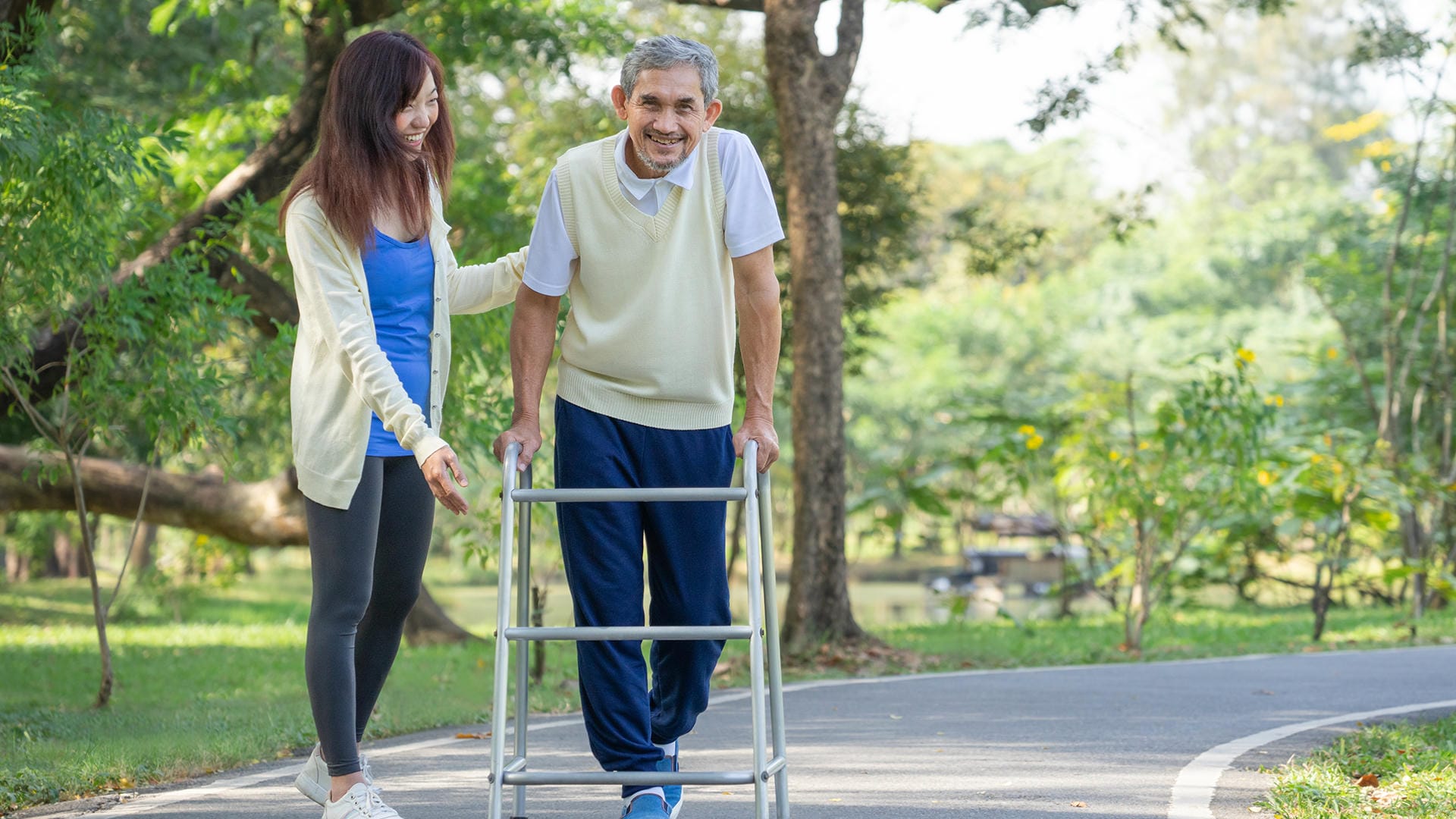
None of the wins here are dramatic. Ten feet with a walker instead of eight. One fewer verbal cue needed for a transfer that used to take three. Nobody photographs a chart like that, and the resident who logged it usually doesn’t either, but a month of those entries adds up to the difference between going home and not.
When Cardiac, Orthopedic, and Wound Care Share a Chart With Cognitive Decline
Dementia rarely travels alone. A resident managing heart failure and memory loss at the same time needs cardiac precautions setting the outer limits of a session while cognitive status shapes how each instruction actually gets delivered inside those limits. Two separate clinical logics, running in the same forty-five minutes. Wound care adds a wrinkle of its own: a dressing change requires cooperation, and cooperation isn’t something a stranger in scrubs gets automatically. It gets earned, one visit at a time.
Even residents without a dementia diagnosis benefit from the same cue-based, patient approach when post-surgical delirium shows up, which happens more than families expect and gets missed constantly by staff who haven’t been trained to separate it from baseline decline.
Dementia Rehab Care Runs on a Different Clock After Four
By late afternoon something shifts. Light angles change, hallway shadows stretch longer than they did an hour before, and a resident who managed a full session calmly at ten can be pacing and irritable by five. Staff schedule around it. The heavier cognitive and physical work goes in the morning, and common-area lighting warms up as the day wears down, cutting back on the deep shadows that tend to pool near doorways right when residents are already on edge.
Family involvement helps here too, in ways more specific than the “stay connected” line every brochure repeats. A familiar photograph on the therapy mat. A grandchild’s name dropped in as a cue word mid-exercise. A song from decades back, playing quietly during a walk down the hall. None of it is sentimental filler bolted onto a clinical plan. It’s clinical, and it happens to also be kind. Those two things aren’t in tension nearly as often as people assume.
Care. Support. Positive Outcomes. Centers Health Care.
Ontario Center handles rehabilitation, skilled nursing, and long-term care, and the needs behind those words vary a lot more than the phrase suggests. Dementia care runs alongside cardiac recovery some weeks, orthopedic rehab other weeks, wound care and short-term stays folded in wherever they’re needed, often more than one at once for the same resident. Surgery recovery isn’t the same job as managing a long illness, and neither one looks much like helping someone whose cognitive change finally got too big for home to handle safely. Three different problems, really, sharing a building and a staff. Whoever’s on shift at Ontario Center tends to start with whatever’s actually going on with that resident that day, not a chart from three weeks ago.
The goal shifts from person to person. Sometimes it’s getting home. Sometimes it’s staying steady, staying engaged, or simply having a better afternoon than yesterday’s. Setbacks are part of the design, not proof the design failed. Staying present through all of it, and helping each resident get as far as they’re able, is the job in its entirety.
Some of that progress arrives in large steps. Most of it arrives in small ones. Either way, it counts.
Steps to Home
Planning for discharge starts long before discharge shows up on the calendar. Family members get taught the same cueing language therapy staff used all along. Someone walks the actual house, room by room, looking for the fall hazards a cognitively healthy adult would walk right past. A daily routine gets built at home to echo, as closely as it can, whatever structure worked at Ontario Center, because a resident who relearned a transfer around one specific phrase needs that phrase waiting at home, not a friendly paraphrase of it. The road back gets built well in advance, one repeated detail at a time, long before the last day arrives.
Our Steps to Home series follows patients through rehabilitation and the journey from hospital to home: