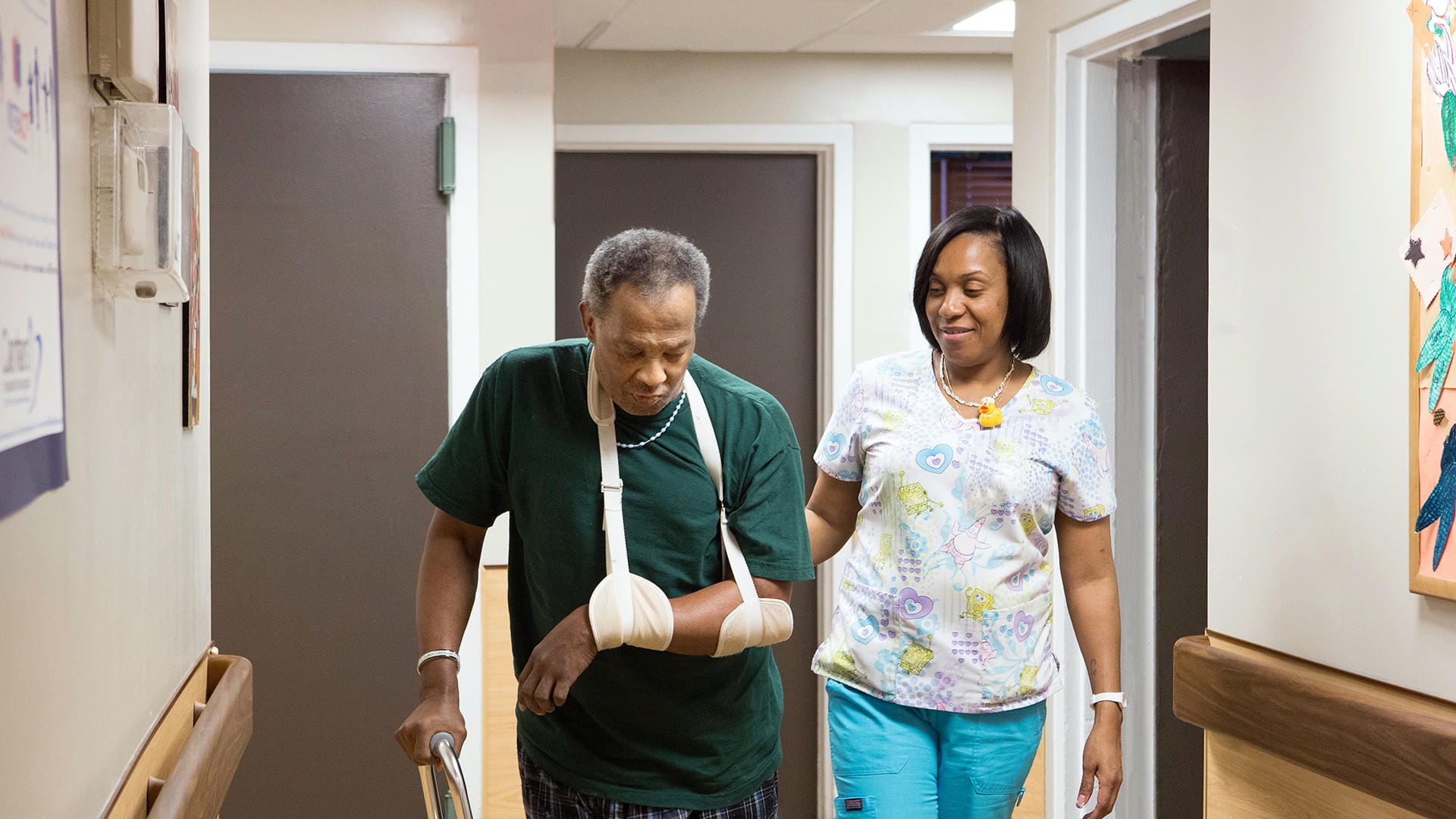
National Family Caregivers Month 2026: Dementia and Stroke-Care Questions for Rochester Families

Ask about Tuesday. The afternoon when your father managed his shirt buttons, then slept through most of your visit. Or the morning your mother pointed to her cup instead of asking for a drink. Those are useful details to bring to a care meeting; ‘How is everything going?’ leaves rather a lot to interpretation.
For National Family Caregivers Month this November 2026, Rochester families can put six questions on paper before visiting: How should we communicate? Which routines help? What is therapy working toward? When does tiredness interfere? What does the person enjoy now? And who should hear what we’ve noticed? Keep the sheet. Add the answers in whatever handwriting you can manage.
Communication questions for dementia and stroke in care Rochester NY
The word won’t come. You offer one; she shakes her head. Another guess, another shake. Before this becomes a contest neither of you wanted, ask the speech-language pathologist what to try. A stroke may have affected her language, a difficulty called aphasia. ‘Is that what we’re dealing with here? What does she understand when I speak?’ Bring those questions even if dementia was diagnosed long before the stroke.
The visit before Thanksgiving
Six visitors arrive together, carrying photographs and several competing accounts of the drive over. Before arranging that Thanksgiving reunion, ask: ‘What time is usually easiest for him? How many people can he comfortably manage?’
A familiar sequence can help someone with dementia: getting dressed, breakfast, a quiet activity. Find out which parts of the day are predictable and where a visit would fit. Then mention the habits you know from home, including the ones nobody would think to ask about. Perhaps he always shaved before eating. Perhaps she dislikes a radio playing during breakfast. The staff cannot infer a forty-year habit from an admission form.
Therapy questions for dementia and stroke care in Rochester NY
A hallway walk can go well and still tell you very little about getting to the toilet at night. Ask about that trip. Or the three steps outside the house, if there are three steps.
When discussing dementia and stroke care in Rochester NY services, bring one ordinary task to the meeting. ‘Can she get her arm into a sleeve? What are you trying with her this week?’ You can ask which therapist is working on it and how much help she needs today.
Before lending a hand, have somebody demonstrate. Watch where they stand and what they say. Try it back under supervision; ask about using teach-back to check your understanding. ‘I think I’ve got it’ is an understandable response, especially when everyone’s busy. Better to discover a misunderstanding with the therapist beside you. Ask, too, what to do if she forgets the instruction halfway through.
When the afternoon runs out
Before you book the whole family for a Sunday afternoon, ask about the afternoon. What happens after lunch? When is therapy? Does he usually sleep then?
Post-stroke fatigue belongs in that conversation. So do poor sleep, changes in mood and possible medication effects, which the clinician can review. No adjusting medicines yourself.
Bring a note with a time on it: ‘Wednesday, 2:15, too tired to finish talking.’ Ask whether to try a morning visit. If he’s suddenly less alert, tell the nurse right away. An observation for next month’s meeting can wait; a new change in his condition shouldn’t.
Before unpacking the turkey
The bingo suggestion goes nowhere. It always has, come to think of it. Ask the activities staff what your father chooses now, and tell them what he used to enjoy on a quiet Saturday. Would he like some music? A few old photographs? Company without a project to finish? Try one idea and see whether he wants to continue. Thanksgiving brings another question: ‘Can he have this turkey?’ Ask staff before serving anything, and follow his swallowing plan, including the instructions about textures, drinks and supervision. If nobody has checked yet, keep the container closed. You can explain the family recipe afterward.
Where your observations should go
Keep the little details. ‘She pushed the cup away twice at two o’clock’ is something you can report without diagnosing anything. Then ask where to send the next observation. A phone call? A note? Which staff member? Write down the answer and ask who covers when that person is away. Check, with the resident involved as appropriate, who may receive information and whom the team should contact.
Put your own name on the list of people who need some support. New York’s Office for the Aging has caregiver resources, including training and support groups. Ask the social worker: ‘Where would I start around Rochester? I’m not sure how much more I can take on.’ You can say that before a discharge date is discussed.
Care. Support. Positive Outcomes. Centers Health Care.
At the door, check that you have the list. You can bring it to Rochester Center at 525 Beahan Road and ask how Dementia Care, Stroke Care and Short-Term Rehab would fit your relative’s needs. ‘Who should hear about his fatigue? Can I show you the routine that used to help? What are you working on in therapy?’ Leave room for the answer about activities he enjoys and how to send observations between meetings. Within the Centers Health Care network, people arrive with different hopes. Perhaps your relative wants to get home after surgery or illness; perhaps home has become too difficult and you’re asking about longer support. Ask what would help him get stronger, do more for himself or feel more comfortable today. Discuss the setback as well as the morning that went better. If he put on his own shirt yesterday, describe how he managed it. The team may have seen a different afternoon.
Care. Support. Positive Outcomes. Centers Health Care.
Centers Health Care provides rehabilitation, skilled nursing and long-term care for people with a wide range of needs. Whether someone is recovering from surgery, managing an illness or simply needs more support than can be provided at home, our staff is there to help.
The goal is not exactly the same for everyone. It may be returning home, becoming stronger, staying independent or simply feeling better and more comfortable from one day to the next. There will be progress, setbacks and difficult days along the way. Our job is to be there through all of it, and to help each patient or resident get as far as he or she can.
Sometimes that progress comes in large steps. More often, it comes in small ones. Either way, every step matters.
Our Steps to Home series follows patients through rehabilitation and the journey from hospital to home: