Global Handwashing Day 2026: A Family Guide to Supporting Wound Care at Bushwick Center
Your father’s bandage has lifted at one corner. He’s talking about lunch; you’re looking at the tape. It would take a second to press it back down. Leave it for the nurse, though. A visitor can’t tell from that loose edge whether the dressing needs replacing.
With October 15 comes Global Handwashing Day, and a fairly ordinary problem for Brooklyn families: what do you actually do with the advice once you’re in the room? At Bushwick Center, start before the hello. Find the hand sanitizer, read the sign, and ask about anything you don’t recognize.
Wound Care in Bushwick: A Checklist for the Visit
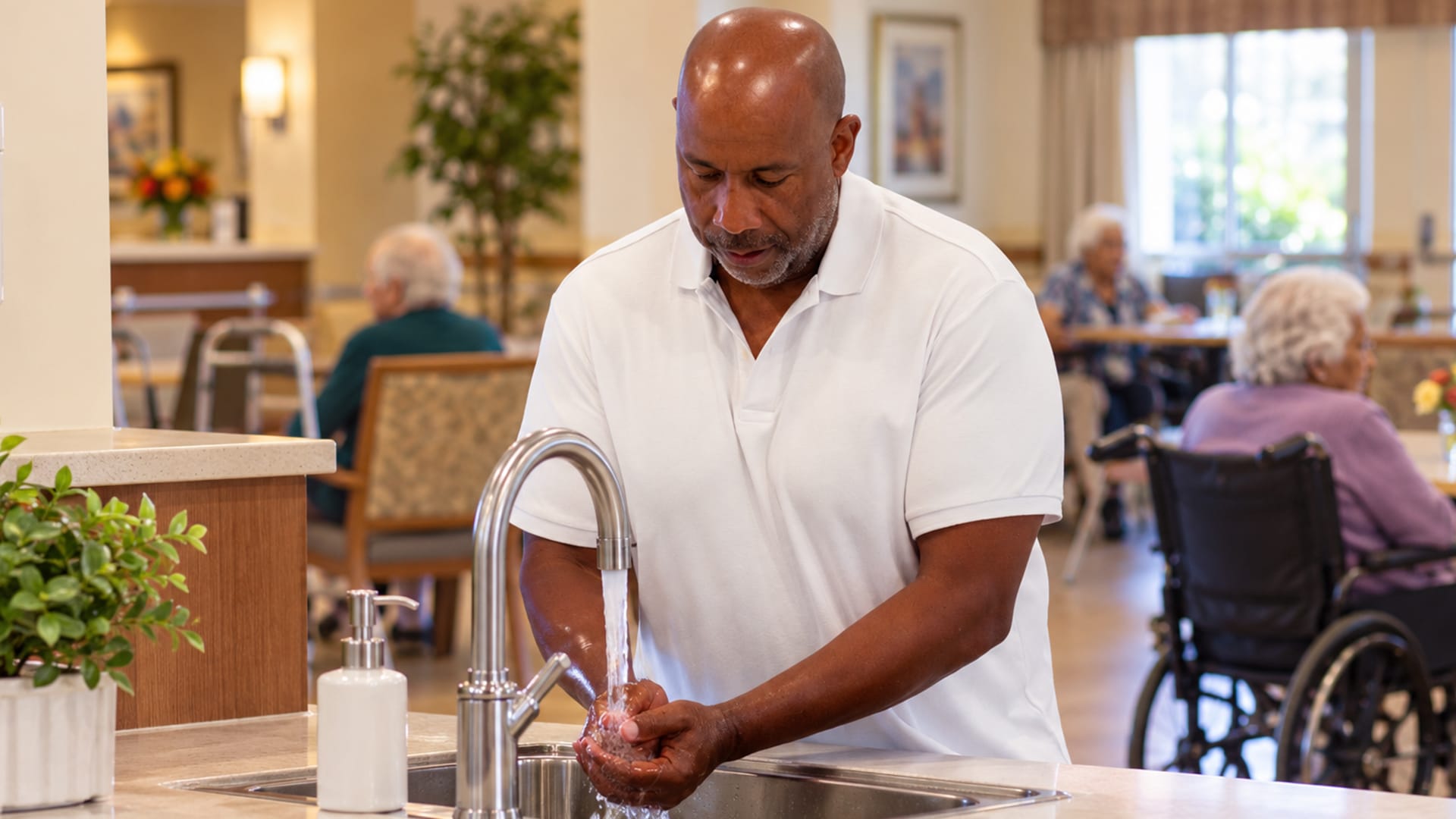
I wouldn’t count the wash at home as the one for the visit. Too much has happened since, even if the trip was short. At the room, use the hand rub before greeting your relative, and again when you leave.
The rest of the checklist can be written as questions:
- Have I been to the bathroom?
- Am I about to eat, or help with a meal?
- Did I blow my nose or cough into my hand?
- Have I been handling the bed rail, table or remote?
Those are occasions for cleaning again. For soap, allow at least 20 seconds of scrubbing before you rinse; the fingernails and spaces between fingers need some of that time. Dry your hands afterward.
For a routine bedside hand cleaning, alcohol-based rub is generally preferred if the hands aren’t visibly dirty. A bottle you bring should say at least 60% alcohol on its label. Let it dry as you rub. After the bathroom, before eating or with visible dirt, use soap and water instead. Ask staff if a posted precaution calls for a particular method.
Read the Sign Before Borrowing a Pair of Gloves
“My brother didn’t have to wear a gown yesterday.” That may be true. It still leaves today’s visitor needing to ask about the sign outside the room, before going through the doorway. Tell the nurse whether you plan to help with anything while you’re there.
The words Enhanced Barrier Precautions have a fairly specific meaning in nursing-home care. They call for staff to use gowns and gloves during certain activities involving considerable physical contact, including a transfer or wound treatment. They address the spread of resistant germs. Somebody with a wound may need that protection even without a diagnosis of infection; the sign itself isn’t a diagnosis.
There is also Contact Precautions, a different category with different requirements. No family should have to decipher either term from the available glove sizes. Ask what the visitor needs to wear, how to remove it and where to put it afterward. Hands need cleaning after gloves come off. New York includes hand hygiene in its nursing-home visitor guidance; at the doorway, you’ll still want the directions for this resident.
Wound Care in Bushwick Brooklyn: What to Ask at the Bedside
The covering looks different from the one you remember. Is that deliberate? A perfectly fair question for the nurse, and a better starting point than lifting an edge to find out for yourself. Visitors should leave the dressing untouched.
I’d also ask about the timing if a change seems overdue. The products and orders may have changed since the resident was at home. Nobody can determine the right schedule by looking at a bandage from a chair across the room. Let the clinician explain what is being used and when it will be reassessed.
Wound-vac treatment appears in Bushwick Center’s list of services. For somebody receiving it, the pump and tubing are part of the treatment. An alarm goes to staff, including one that stops before the nurse gets there. Visitors shouldn’t adjust settings, shift tubing or disconnect the device.
Put “ask before moving anything” on the checklist. That includes helping a resident into another position or shifting a pillow near the injured area. Find out what the team wants you to do when your relative asks for help getting comfortable.
Leave the Supplies at Home Until Someone Has Checked
An unopened packet of gauze can sit in a closet for months. Finding it before a visit doesn’t tell you whether the resident’s current treatment calls for it. Phone the unit with the product name before packing it, and do the same with any cream somebody has recommended.
I’d be particularly cautious about the old medicine-cabinet remedies. Peroxide can damage tissue that is healing. Alcohol and unapproved lotions aren’t something to apply on a visitor’s initiative, either. The clinical team decides what goes on the wound. Ask even if your relative remembers using a product before.
During the visit, increased pain or a fever deserves prompt mention to the nurse. More redness or swelling, or drainage that wasn’t there earlier, also needs reporting. Leave the bandage in place while you describe what you’ve noticed. A relative can report a change without supplying a diagnosis. Give the time as well: a complaint that began before lunch is information the clinician may need when assessing what happened.
Care. Support. Positive Outcomes. Centers Health Care.
A trip back to the apartment may be the aim, though getting dressed still takes help. For a resident staying longer, being comfortable in the afternoon may take priority. Centers Health Care’s affiliated facilities offer rehabilitation and skilled nursing, as well as long-term care when continuing assistance is needed. Goals should be discussed with the person receiving that care. Progress can be uneven, and families should be able to ask about a setback without waiting for the next formal meeting. Sometimes the change a resident notices is doing an ordinary task with a little less help.
At Bushwick Center, 50 Sheffield Avenue in Brooklyn, Wound Care is offered alongside Short-Term Rehab, Long-Term Care, Stroke Care and Pain Management. For a family researching “wound care Bushwick Brooklyn,” a visit is a chance to ask how those services fit the resident’s needs. Bring up the dressing concern or the uncomfortable sitting position while you’re there. Ask whom to contact when another relative notices something on a later visit, too.
Care. Support. Positive Outcomes. Centers Health Care.
Centers Health Care provides rehabilitation, skilled nursing and long-term care for people with a wide range of needs. Whether someone is recovering from surgery, managing an illness or simply needs more support than can be provided at home, our staff is there to help.
The goal is not exactly the same for everyone. It may be returning home, becoming stronger, staying independent or simply feeling better and more comfortable from one day to the next. There will be progress, setbacks and difficult days along the way. Our job is to be there through all of it, and to help each patient or resident get as far as he or she can.
Sometimes that progress comes in large steps. More often, it comes in small ones. Either way, every step matters.
Our Steps to Home series follows patients through rehabilitation and the journey from hospital to home: