Global Handwashing Day 2026: Why Clean Hands Matter During Wound Recovery at Bronx Center
You’ve washed your hands, found the room, and pulled up a chair. Then the phone rings. You answer it, pass it across the bed, and reach for the resident’s hand. Somewhere in that ordinary visit, the clean-hands part needs doing again.
For October 15, Global Handwashing Day, I’d start there. Families looking into wound care in the Bronx have plenty to ask about treatment; they also need to know what to do with their own hands while visiting. At Bronx Center, ask the nurse before helping with a dressing, even when the tape looks easy enough to fix. Nobody needs an amateur inspection under the bandage.
Wound care in the Bronx: What Happened Since You Washed?
I suspect most of us count the wash we remember. The one before leaving home, perhaps, although a subway ride and a phone call have intervened. For a visit, I’d count backward from the next thing my hands are about to do. Am I opening food? Helping my relative with something the nurse approved? Time to clean them again.
The CDC’s visitor advice includes a detail easily missed in conversation about wounds: touching a bedside surface is itself a reason for another round of hand hygiene. The remote counts. So does the rail you leaned against while talking. After coughing, sneezing, or blowing your nose, there’s another interruption; after the bathroom, head for soap and water. I’d also clean up on entering and leaving the room, however short the visit.
A Word About the Thumbs
It’s possible to give your palms a vigorous rub and barely involve your thumbs. I’d watch those, and the fingertips, before assuming the job is done. Sixty percent alcohol is the lower limit to look for on a sanitizer bottle; its instructions supply the amount to use. Work the product across the whole hand until it dries. For hands without visible dirt, healthcare guidance generally favors that dispenser.
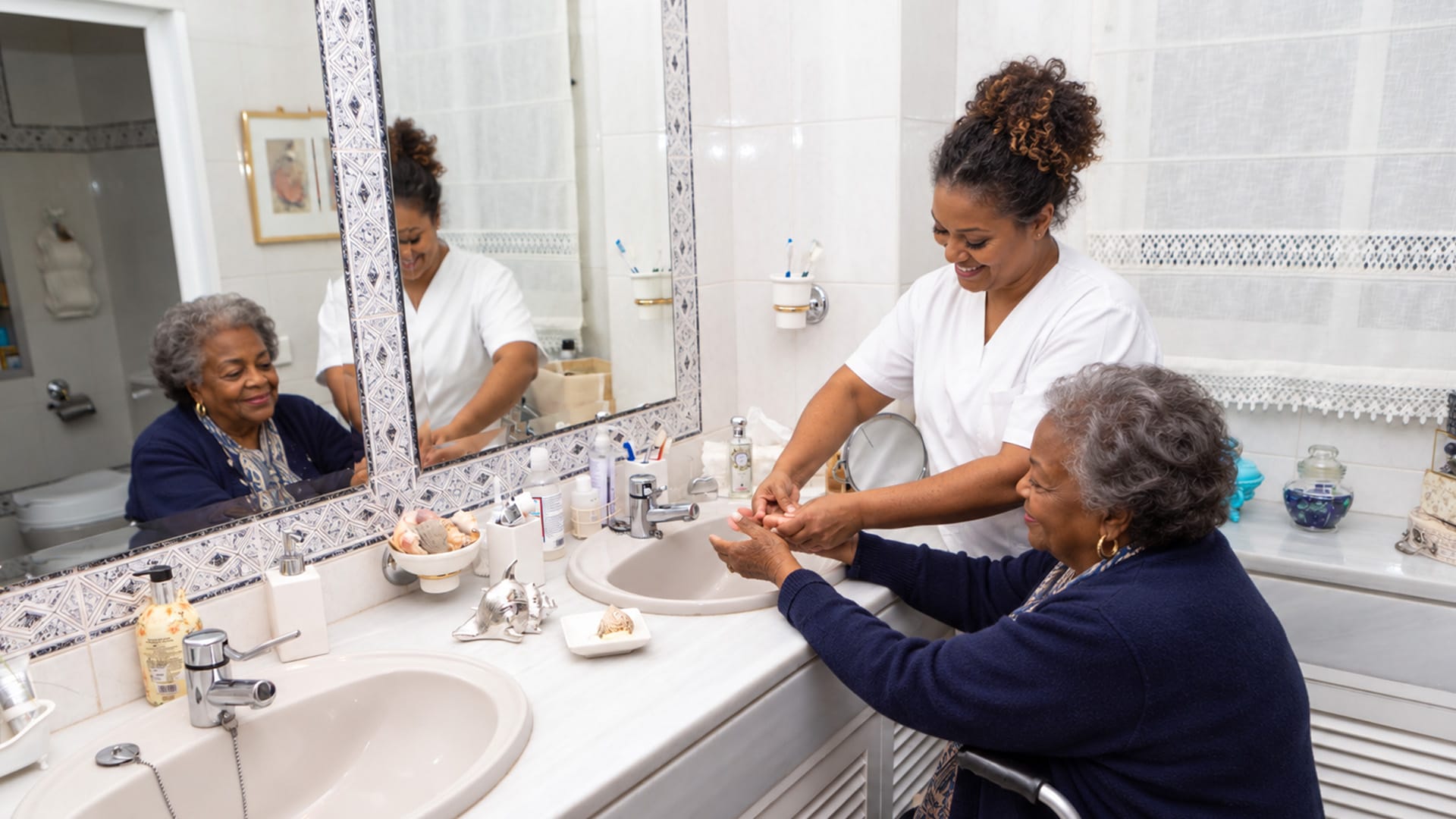
The 20-second minimum at a sink refers to scrubbing with soap, incidentally; getting the water going is extra. Get around the nails, between fingers, and onto the backs of the hands before the rinse and drying. I’d use the sink after the bathroom or for visible grime, and ask the nurse about any further requirements posted for the room.
The Sign Might Have Changed
Last week’s instructions can stick in your head after staff have changed the precautions. Read what’s posted now, and have the nurse explain anything you don’t follow. I’d want that conversation before helping with a transfer, especially if I’d only intended to sit and talk.
One term families may encounter is Enhanced Barrier Precautions. Here the extra gown-and-glove protection is tied to the sort of hands-on care being done, with wound treatment among the activities covered. Having a chronic wound can be enough to qualify a resident; a confirmed infection isn’t a prerequisite. Contact Precautions operate differently. Let staff tell you how the distinction affects today’s visit, rather than reading a diagnosis into a gown.
A gloved hand that has handled your phone has handled your phone. Keep it away from clean supplies. If you’re asked to use gloves, get the removal instructions too, and clean your hands before putting them on and after taking them off. It’s surprisingly easy to remember the gloves and forget the hands underneath.
Wound care in the Bronx, NY: Leave the Bandage in Place
An older relative may remember peroxide as the answer to almost any cut. That memory can survive several decades of changed advice. I’d ask the nurse to go over the orders before accepting anybody’s recommendation, however confidently offered. Peroxide can harm the tissue we’re trying to preserve, and the clinician should approve anything applied to the area, creams included. And the alcohol product used on your hands has no business going into the wound.
Ask who is supposed to change the covering, and when, under this resident’s treatment plan. Peeling back a corner to satisfy your own curiosity can wait for the person doing the care.
There is plenty to report without conducting an examination. Has your relative mentioned more pain? Is redness extending past where it was, or swelling appearing? A new smell, heavier drainage, or a fever belongs in that conversation promptly. Give the nurse the time you first noticed it, as nearly as you can. I wouldn’t wait for the next family meeting to mention that something had changed.
Who Will Do This at Home?
Ten minutes before the ride arrives is a poor time to discover that nobody knows who will change the dressing tomorrow. If home is the plan, bring the person expected to help into the teaching conversation early. That person should see the task demonstrated and have a chance to practice under staff supervision, as appropriate.
I would ask for the instructions in writing, including whom to call after hours. Then I’d explain the plan back to the nurse. A nod can conceal a remarkable number of unanswered questions. Is the helper comfortable handling the supplies? What happens when your relative tries to reach the soap or operate the tap? Admit the difficulties now, even the ones you feel you ought to be able to handle.
Care. Support. Positive Outcomes. Centers Health Care.
A resident might be thinking about the stairs at home while the family is asking about a wound. The goal has to come from the person receiving that care. A return home may be possible; for someone else, getting comfortable enough to enjoy a visit may occupy today’s attention. Leave room to hear which concern the resident brings up.
On Underhill Avenue, at number 1010, Bronx Center lists Wound Care, Long-Term Care and Short-Term Rehab, as well as Pain Management and Stroke Care. I’d bring the questions raised by a search for “wound care Bronx NY” to that team: what may I help with, and what should I call you to do? During an October visit, have someone explain the hand-hygiene instructions posted for your relative before settling in.
Care. Support. Positive Outcomes. Centers Health Care.
Centers Health Care provides rehabilitation, skilled nursing and long-term care for people with a wide range of needs. Whether someone is recovering from surgery, managing an illness or simply needs more support than can be provided at home, our staff is there to help.
The goal is not exactly the same for everyone. It may be returning home, becoming stronger, staying independent or simply feeling better and more comfortable from one day to the next. There will be progress, setbacks and difficult days along the way. Our job is to be there through all of it, and to help each patient or resident get as far as he or she can.
Sometimes that progress comes in large steps. More often, it comes in small ones. Either way, every step matters.
Our Steps to Home series follows patients through rehabilitation and the journey from hospital to home: