Halloween 2026 Without the Overwhelm: Dementia-Friendly Celebrations at Carthage Center
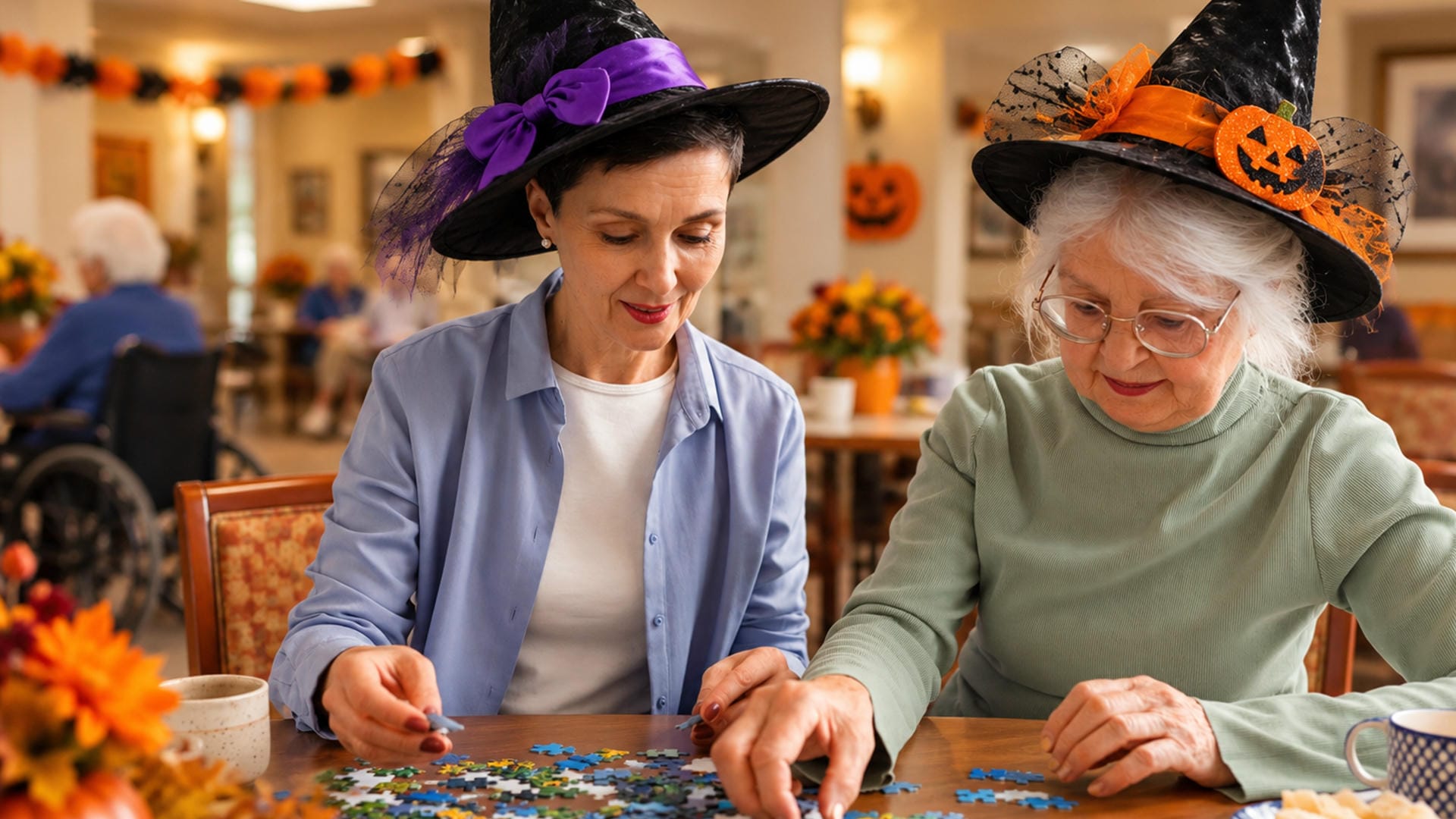
Leave the mask in the car. You can always go back for it if your relative wants to see it; undoing a fright takes longer.
That would be my starting point for a Halloween visit with someone who has dementia. We tend to prepare for holidays by adding things. More decorations, another visitor, a bag of treats. By the time everybody arrives, the person we came to see may have had quite enough. Saturday, October 31, 2026, leaves families a whole weekend day to work with. Nobody has to use all of it.
For anyone looking into dementia care in Carthage NY, there is a practical question worth bringing to a center: what would this particular resident enjoy doing that morning?
Dementia Care in Carthage NY: Who Picked the Visiting Time?
An eleven o’clock visit sounds early to the teenager who hoped to sleep in. For a resident who is tired by midafternoon, it might be the sensible choice. I’d let the teenager be mildly inconvenienced. I’d put eleven to the staff before promising it to the grandchildren; a bath or a late breakfast could make my sensible plan rather less sensible.
What about evening? A late afternoon visit could also run into sundowning, if your relative has been getting more restless or confused at that time of day. Has she been tired at supper lately? The nurse’s answer would settle more for me than an argument over who’s available at five.
Even with the timing sorted out, I would be wary of inviting everybody at once. There’s a whole Sunday available for another visit. You can tell the relatives separately about the pumpkin.
The Spider Can Stay in the Bag
Who gets the pleasure from a motion-activated skeleton: the resident, or the relative who bought it? I’d ask that before unpacking. A person with dementia may have trouble interpreting a frightening display, however many times somebody explains the joke. Specialist Halloween advice recommends ordinary autumn decorations and cautions against flashing effects or objects that suddenly make noise.
A pumpkin on an approved tabletop would be enough for me. Perhaps your relative would rather look at a picture of the grandchildren. Staff should have a say before anything goes on the wall; a sign obscured by a decoration is still obscured, however tasteful the decoration.
Then there’s the floor, which tends to collect everything people have brought. Leave the route to the bathroom open and give the walking aid room. A bag tucked close to a chair may be exactly where a resident needs to put a foot. Furniture should stay put unless staff approve a change.
“He Used to Love That Song”
The song has barely started and somebody is already singing along. Lovely, unless the resident is trying to have a conversation and can’t hear a word. I would keep the recording low, play one selection and wait. You learn more from the person’s response than from a relative’s assurances about what Dad has always enjoyed. Quiet music can help with relaxation; it’s an option to try, with the listener allowed to veto it.
Photographs are another possibility, though I’d leave the questions out of it. You can talk about the cape in a Halloween picture without requiring anybody to name the year. A person who remembers the sewing machine instead has supplied a perfectly good subject.
And if a grandchild wants to color a pumpkin, put the paper where both can see it. With staff-approved supplies and help where needed, the resident might join in or offer an opinion. Small pieces need particular caution around someone who might swallow them. I wouldn’t keep coaxing an adult who has plainly lost interest.
Dementia Care in Carthage, NY: Permission to Call It a Day
“We haven’t even taken the picture.” A family member may be thinking it while the resident is already asking to go. Put the phone away. Find out where they would rather sit, with staff assistance for movement when required.
Repeatedly asking for somebody, pulling back from a visitor or becoming unusually restless can prompt a check-in. Reduce the commotion and give the person room. One calm voice is easier to follow than a cluster of concerned relatives all asking what’s wrong.
I’d be slow to blame a plastic pumpkin for something a nurse ought to hear about. Even with a party going on, I’d go straight to the nurse about an abrupt change in alertness or behavior; being tired, thirsty or uncomfortable is among the possibilities staff may need to consider. Report what happened: the resident winced when getting up, for instance, or became much more confused over a short period. Include roughly when it began. Staff can assess causes that a visitor may have no way to recognize.
Care. Support. Positive Outcomes. Centers Health Care.
Centers Health Care provides rehabilitation, skilled nursing and long-term care for people with a wide range of needs. Whether someone is recovering from surgery, managing an illness or simply needs more support than can be provided at home, our staff is there to help.
The goal is not exactly the same for everyone. It may be returning home, becoming stronger, staying independent or simply feeling better and more comfortable from one day to the next. There will be progress, setbacks and difficult days along the way. Our job is to be there through all of it, and to help each patient or resident get as far as he or she can.
Sometimes that progress comes in large steps. More often, it comes in small ones. Either way, every step matters.
Our Steps to Home series follows patients through rehabilitation and the journey from hospital to home: