National Rehabilitation Awareness Week: Rebuilding Daily Independence After Stroke at Bronx Center
A coffee cup can expose more about stroke recovery than a long conversation. Can the patient see it on the affected side? Reach without losing balance? Close the hand around the handle? Remember that the coffee is hot? Ask for help if swallowing has become difficult? One ordinary object can involve vision, attention, movement, judgment, communication and confidence.
That is the useful lens for National Rehabilitation Awareness Week, observed September 14–20, 2026. Its theme this year is “Building Futures Through Rehabilitation.” The future, for somebody recovering from a stroke, often begins with getting through an ordinary morning with less help.
At ten in the morning, a patient crosses the room neatly. At three, the weaker foot catches twice. Both walks count. So does the pause before standing, the hand left hanging beside a shirt sleeve, and the glance toward a spouse whenever a question gets difficult.
A starting record may look almost fussy: 22 seconds to cover 10 meters; hands needed to rise from the chair; one cue before turning; water followed by a cough. Good. Vague notes age badly. “Doing better” cannot tell next week’s therapist whether balance improved or everybody simply got used to helping.
The awkward little failures are useful. They show where practice should begin and give the team something honest to compare later. Stroke recovery rarely arrives as one large deficit with one matching exercise.
“He walked today” sounds reassuring. It leaves out nearly everything a family needs to know. How far? With what device? Did the weaker knee buckle? Could he stop, turn and sit without dropping into the chair? What happened when somebody spoke to him halfway down the hall?
Physical therapy can work on weight shifting, foot clearance, endurance, turning and recovery from a small loss of balance. Repetition is deliberate. The national adult stroke-rehabilitation guideline released on August 27, 2026, calls for sufficient amounts and intensity of task practice, with moderate- to high-intensity exercise after the first 24 hours when medically appropriate. In a post-acute setting, the prescription still has to account for blood pressure, pain, fatigue, fall risk and other conditions.
Transfers deserve the same attention as walking. Many falls occur during the short moves people barely think about: bed to chair, chair to toilet, standing at the sink. A clean transfer may be a more meaningful milestone than another ten feet in the hallway.
Buttons are merciless. So are toothpaste caps, shirt sleeves and the edge of a bathtub.
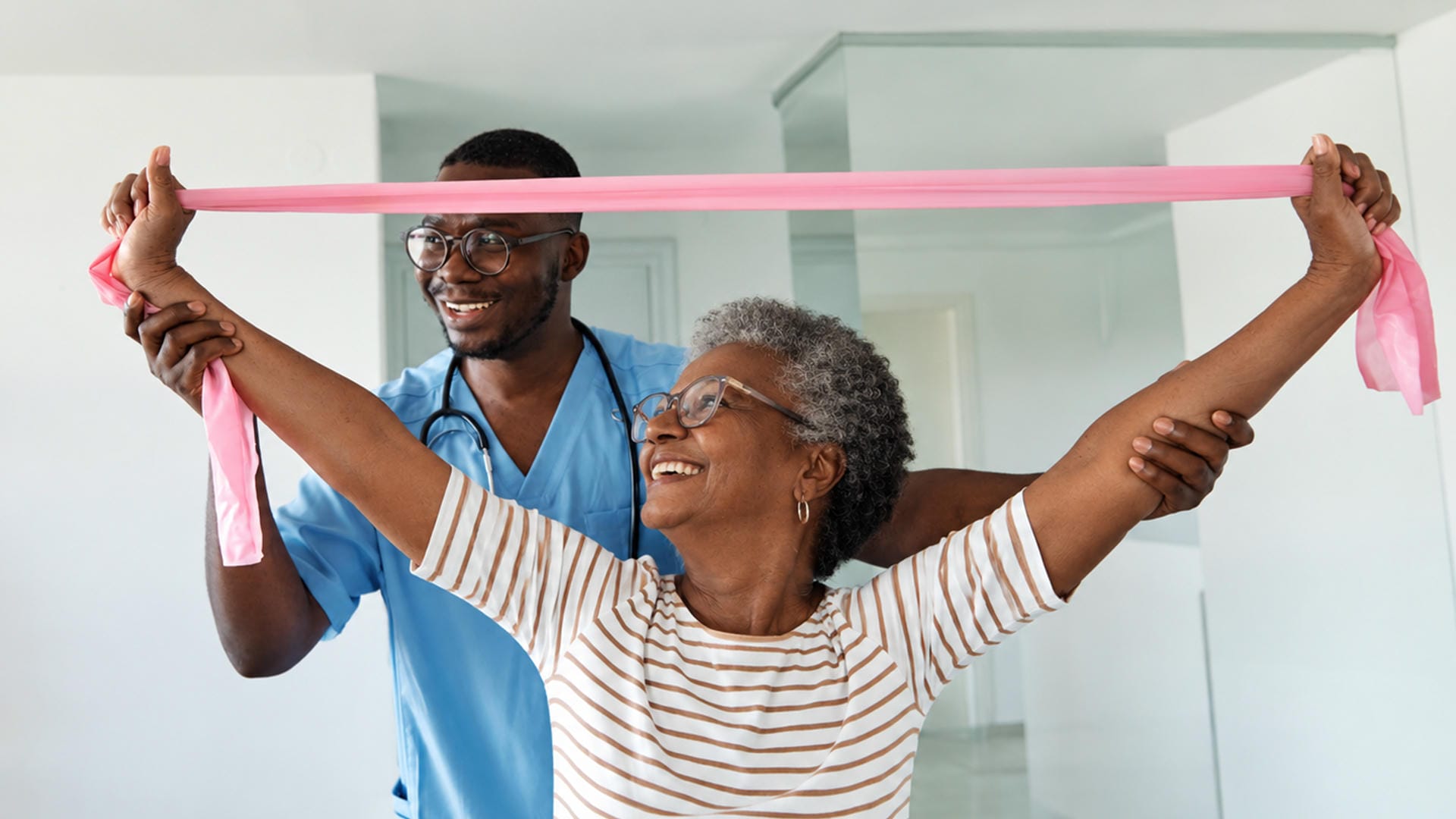
Occupational therapy brings recovery into the routines a patient will actually face. Dressing may be practiced in a seated position, with the weaker arm placed first. Grooming can uncover neglect of one side. Toileting combines balance, clothing management, timing and privacy. If a hand remains limited, adaptive equipment or a different technique may turn a two-person task into one the patient can manage with supervision.
Speech therapy reaches well beyond pronunciation. The work may include word retrieval, comprehension, reading, memory aids, problem-solving and safe swallowing. A patient who nods politely may not have understood a multistep instruction. Staff can shorten the direction, allow extra response time or use a picture board. Families need to learn that rhythm; rushing in to supply every word can make an already frustrating exchange worse.
Then there is confidence, easy to dismiss because it does not fit neatly on a strength scale. Fear of falling can make somebody stiffen, grab furniture and move less safely. Depression and anxiety can blunt participation. The 2026 guideline recommends early screening and repeat checks over time. A brief tool such as the PHQ-2 may open a conversation that “How are you feeling?” never did.
A new adult stroke-rehabilitation guideline landed on August 27, 2026. Convenient timing for a September article, yes. Its more useful contribution is a refusal to treat discharge as the end of the clinical story.
Measure a skill the same way twice. Look again after the patient has been home. If walking, mood or daily function has slipped, reopen the therapy question. If an old exercise has gone nowhere, try another route. The guideline leaves plenty of uncertainty about dose and timing, but it does not turn that uncertainty into an excuse for drift.
Families have work to do before departure as well. Let the daughter set up the chair. Have the husband guard the turn. Ask each one to show where the weaker arm goes and name the point at which they would stop. A nod from across the room is pleasant; it is poor evidence.
Bring out a tape measure. The walker that sails through a therapy gym may not turn beside a Bronx toilet. A tub wall changes the bathing plan. So can two front steps, a stubborn lobby door or the distance from the elevator.
Before discharge, ask annoyingly literal questions. Which side is the bed on? Where will the chair sit? Can a helper stand there without getting trapped against the sink? Family photos and measurements can save a lot of guessing. Loose rugs and electrical cords should be out of the route; the trip from bed to bathroom needs enough light at two in the morning.
Any cane, walker, tub bench or raised seat should enter the conversation while there is still time to practice. A device can be correct in theory and impossible in the room where it is supposed to work. Homes are good at exposing that sort of thing.
One patient wants the front-door key back in his own hand. Another is working toward a steadier transfer. A long-term resident may be aiming for less pain and an easier morning routine. Centers Health Care brings rehabilitation, skilled nursing and long-term support to those very different days.
Setbacks belong in the record alongside gains. Yesterday’s clean walk does not erase today’s fatigue; a rough session does not cancel the progress already made. Staff keep adjusting around what the patient or resident can do now and what comes next.
Bronx Center for Rehabilitation and Nursing
At Bronx Center on Underhill Avenue, Stroke Care and Short-Term Rehab can bring walking, balance, transfers, communication and self-care into one recovery plan. Nursing staff can flag changes that show up outside therapy. Pain Management, Wound Care and Long-Term Care are available when the clinical picture asks for more. Before a family heads home, the plan should be something they have watched, practiced and understood.
Steps to Home starts well before the discharge ride. Goals get named. Skills get checked again. The person who will help at home gets hands-on practice, and the actual apartment enters the discussion. Some patients leave using equipment; others still need supervision or continued services. Nobody benefits from pretending those differences are small.
Care. Support. Positive Outcomes. Centers Health Care.
Centers Health Care provides rehabilitation, skilled nursing and long-term care for people with a wide range of needs. Whether someone is recovering from surgery, managing an illness or simply needs more support than can be provided at home, our staff is there to help.
The goal is not exactly the same for everyone. It may be returning home, becoming stronger, staying independent or simply feeling better and more comfortable from one day to the next. There will be progress, setbacks and difficult days along the way. Our job is to be there through all of it, and to help each patient or resident get as far as he or she can.
Sometimes that progress comes in large steps. More often, it comes in small ones. Either way, every step matters.
Our Steps to Home series follows patients through rehabilitation and the journey from hospital to home: