World COPD Day 2026: Respiratory Support and Ventilator Care in Staten Island, NY, at Richmond Center
Half a piece of toast comes back on the breakfast tray. There’s nothing unusual about that, unless your mother says she put it down because she ran out of breath. Breakfast is a useful detail to give the nurse. Was Mom still in bed when the breathlessness started, or did she have to stop eating once she got to the table? It’s a question you may be able to answer if you were in the room, and one she may be too winded to answer herself.
November 18 was World COPD Day. The people behind it spent this year talking about getting COPD diagnosed earlier, while a person may still be putting their shortness of breath down to age or being out of shape. The diagnosis is one for a clinician. There’s a breathing test called spirometry in which you have to blow into a mouthpiece, hard and fast, until you’ve got as much air out as you can. It can help the clinician establish whether you have chronic obstructive pulmonary disease.
What to Ask About Ventilator Care in Staten Island, NY
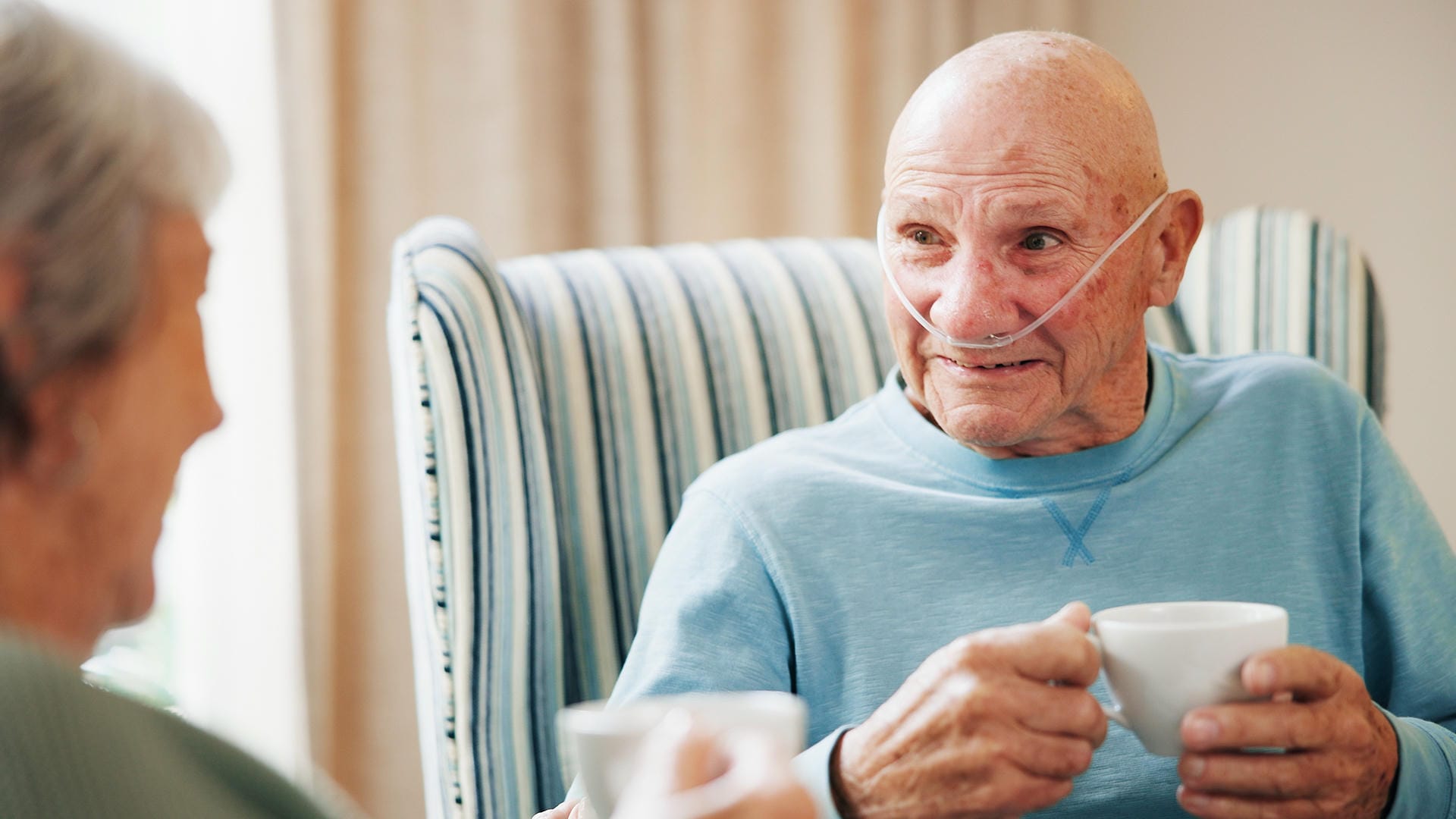
Look at the nose first. Those little prongs you see there can give somebody oxygen while they breathe on their own. You’ll sometimes see a mask instead, with a wider hose running into it. If that’s a ventilator mask, the machine is using pressure to help air get into the lungs. For a person with a tracheostomy, the hose can be connected to a tube that goes in through the neck. There can be extra oxygen in that air as well.
The number you’re seeing comes from a light in the clip on her finger. It’s an estimate of blood oxygen. Put that clip on a cold hand and it may be less accurate. Skin pigmentation can also affect the result. I’d rather tell the nurse that my mother’s breathing looks harder than try to decide what the number allows me to believe. As for the beep that seems to come every time she shifts in bed, let staff take a look, with the controls left as they were.
When Dad Can’t Call Out
A board with the letters of the alphabet can save an awful lot of guessing, provided it’s near enough for somebody to use. If your father answers by moving his eyes, ask him a question you already know the answer to and give him time to show you how he says yes. Depending on the person and the equipment, a speaking valve may be an option even with a ventilator attached to a tracheostomy. The speech-language pathologist can help figure that out with the rest of the team.
You don’t get much of a view of the bridge of Dad’s nose with the mask in place. He can probably feel it better than you can see it. If he looks sore, bring the nurse over and show her what he was pointing at. There’s a similar problem with the skin underneath a tracheostomy tube holder. That’s another spot the nurse can check when you’ve seen something, or when your relative can show her where it hurts.
Daily Routines in Ventilator Care in Staten Island, NY
If there’s a word you’re liable to hear twice and still have to ask about, it’s humidification. Part of the reason the nose is there is to put some moisture into the air on the way down. A tube in the neck sends air past the nose, which leaves the respiratory team with the job of getting moisture into the air by another route. I’d bring it up if someone tells me my relative is having a harder time with thick mucus. That’s a better question than “How’s everything going?”
Before anyone moves the bed so Grandpa can see the Knicks game, I’d check with the nurse. The raised head of a bed can be part of the precautions staff take against pneumonia when somebody is on a ventilator. Ask about the mouth care while you’ve got the nurse there. The rest begins out in the hall. Wash or sanitize your hands on your way in and do it again on your way out. If you’ve gotten as far as the parking lot with a new cough, call up to the unit from there.
Have the COPD Action Plan Handy
The sheet with the green, yellow and red bands is a COPD action plan. On a decent day you can sit with the nurse and go over the yellow band, where you’ll find things such as a new cough or mucus that changes color or gets heavier. By far the most useful thing to have written next to it is the number for the care team. In a care setting, get a staff member right away if the person suddenly can’t catch their breath. At home severe trouble breathing or blue lips is a reason to call 911.
Who Takes the Call After Work?
When the family calls for an update, it saves everybody time if the nurse knows when you last saw your mother. Tell the nurse she was on her way to the chair, or just settling down after a meal, or whatever else you can remember. That’s a better place to begin than where the family group chat is likely to end up. I’d ask for a contact at the facility when looking into ventilator care in Staten Island, NY, especially if most calls have to wait until after work.
Richmond Center on Tompkins Avenue
Ask the person on the phone at Richmond Center what happens between supper and bedtime for a resident who uses a ventilator. That’s a good time to find out how the care team picks up a change in breathing and how your relative would get somebody’s attention if the mask hurt. The address is 91 Tompkins Avenue, Staten Island. The service listing includes Ventilator Care, Long-Term Care and Short-Term Rehab, as well as Cardiac Care, HIV/AIDS Care, a Neurobehavioral Unit, Pain Management, Stroke Care and Wound Care.
Care. Support. Positive Outcomes. Centers Health Care.
Centers Health Care provides rehabilitation, skilled nursing and long-term care for people with a wide range of needs. Whether someone is recovering from surgery, managing an illness or simply needs more support than can be provided at home, our staff is there to help.
The goal is not exactly the same for everyone. It may be returning home, becoming stronger, staying independent or simply feeling better and more comfortable from one day to the next. There will be progress, setbacks and difficult days along the way. Our job is to be there through all of it, and to help each patient or resident get as far as he or she can.
Sometimes that progress comes in large steps. More often, it comes in small ones. Either way, every step matters.
Our Steps to Home series follows patients through rehabilitation and the journey from hospital to home: