World Pneumonia Day 2026: A Family Guide to Ventilator Care in Bronx, NY, at Triboro Center
“He usually mouths a few words when I walk in. Today, nothing.”
I’d tell the nurse exactly that. No medical vocabulary required, and no need to decide whether the difference is serious before mentioning it.
November 12 is World Pneumonia Day. For a family visiting Triboro Center, I would use the date to put a few questions on paper. What does the respiratory team watch? Who should hear about something you noticed during a visit? Where does mouth care fit?
There is a particular infection to ask about when a breathing tube is involved: ventilator-associated pneumonia, often shortened to VAP. Bacteria entering the lungs can cause it. The machine supports breathing; it doesn’t make the lungs immune to infection. Families looking into ventilator care in Bronx, NY, deserve an explanation of the prevention plan in words they can follow.
Tell the nurse what happened, and when
The time is the detail I’d put first in a note to the nurse. At two o’clock, for instance, a relative who usually follows your conversation kept dozing off. It may feel like an incomplete report. Bring it forward promptly anyway.
Try ordinary words. “That cough sounds different from yesterday.” “There’s more mucus.” “He seems to be working harder with each breath.” Those are examples of things a visitor might notice, and staff need to hear about them without waiting for the next family meeting.
I wouldn’t spend the afternoon trying to decide whether to call it pneumonia. Assessing the cause is the clinician’s job.
For an urgent change, summon staff immediately through the unit’s call system. Ask in advance how that works. If a concern remains unresolved, find out who handles it next and keep the name with the unit’s phone number.
Daily monitoring during ventilator care in Bronx, NY
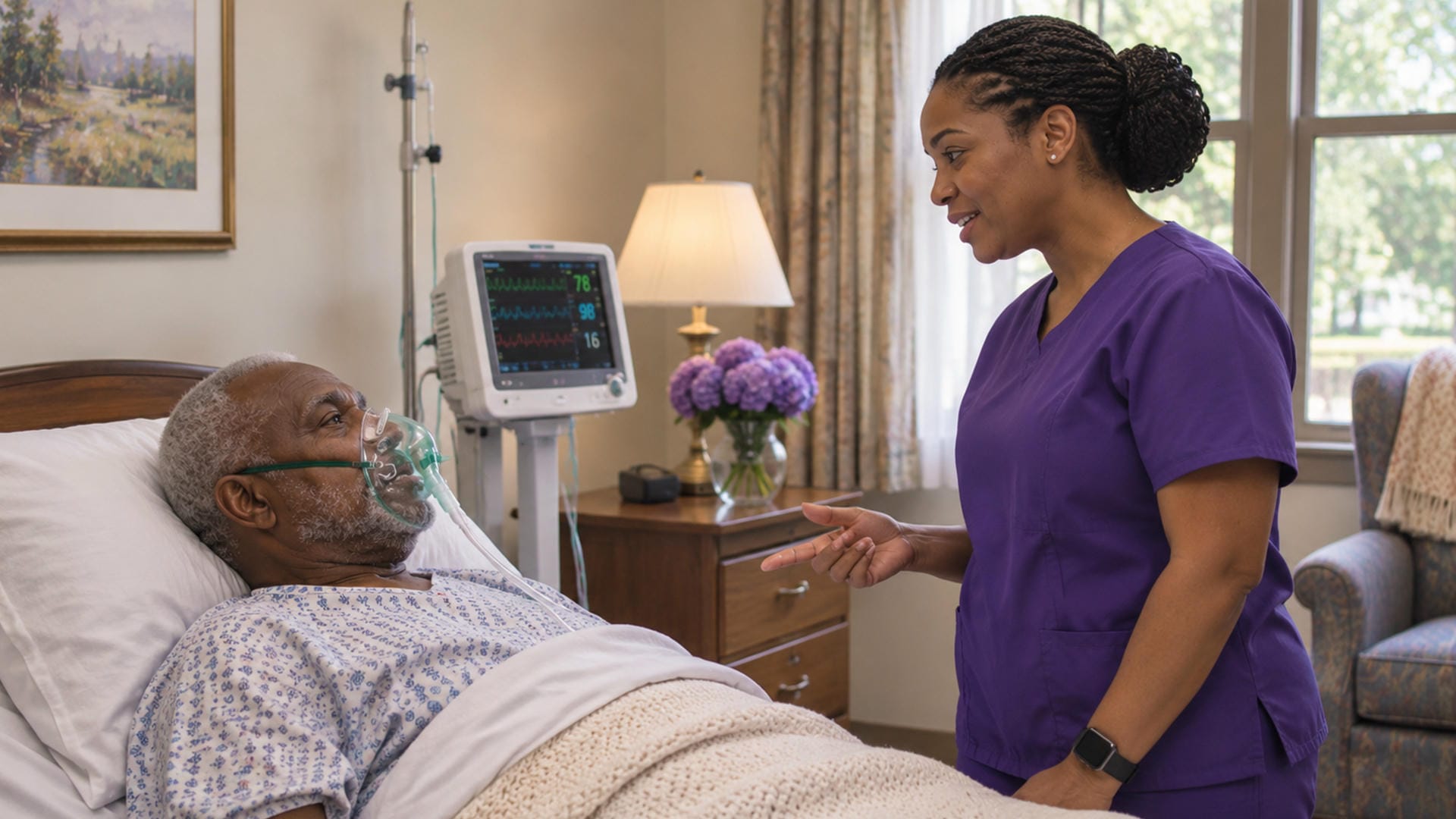
Point to the oxygen reading and ask the therapist, “What range are you aiming for with my father?” I would rather have that answer than a reassuring nod over a screen I couldn’t interpret.
The finger sensor estimates oxygen saturation. Carbon dioxide is another question entirely; a clinician may order blood testing to understand that part of the picture. Meanwhile, there is a person in the bed. Is breathing visibly harder today? More mucus? Does the current support seem comfortable?
I would bring up the 2024 Patient-Ventilator Assessment guideline during a quieter conversation. Among its checks are the skin touching a mask or airway, moisture in the delivered air, and the security of the breathing tube. “How are those checked here?” is enough of a question.
Before settling into a visit, find the call system. An alarm means get staff; adjusting the controls or handling the tubing belongs to trained personnel.
The visit may need to wait
The phone call I’d make before leaving home is a plain one: “I’ve developed a sore throat. I was planning to visit today.” A recent exposure belongs in that call as well. Follow the unit’s advice and postpone routine visits while infectious; a conversation by phone may have to do for now.
New York’s weekly respiratory surveillance runs from October through May. I’d check today’s entrance notices during that November visit, even if I knew the routine last week.
If protective items are required, I would want somebody to watch me put them on and show me how to take them off. That includes any mask, gown, or gloves. I’d clean my hands before and after contact, gloves or no gloves. For the clinician, there is another question to write down: does my relative need any recommended respiratory immunizations?
Questions about ventilator care in Bronx, NY, worth writing down
“Stable” is a word I’d ask someone to unpack. Stable compared with last night? On the same amount of breathing assistance? What would cause the team to reconsider the plan?
I’d keep the questions on paper. It is surprisingly easy to remember them again on the ride home.
One would be about the mouth. How are the teeth and gums cleaned, and how are secretions handled? Another concerns the prescribed bed position. Before bringing food or offering water, check the swallowing instructions; a family member cannot judge safety by how thirsty someone looks.
Then there is the question everybody may be thinking about: can the machine do less? A spontaneous breathing trial lets clinicians assess breathing with reduced support when appropriate. It may be unsuitable now, or unsuitable altogether. Ask what the next goal is in that case. Comfort, a way to communicate, or enough stamina for part of a therapy session may be the goal under discussion.
Care. Support. Positive Outcomes. Centers Health Care.
At lunch, perhaps the effort of getting dressed has already used up someone’s energy. At Centers Health Care, our work with that person may involve rehabilitation after an illness, help from skilled nursing, or the daily assistance of long-term care. The schedule has to take account of the person living through it.
We may be working toward a return home. We may be helping a resident hold on to an everyday skill or find relief from discomfort. I would want the resident’s wishes in that conversation, especially when a setback changes what seemed possible last week. Progress can be a longer stretch out of bed, followed by an afternoon that calls for more rest than expected.
At Triboro Center on Teller Avenue
Save 1160 Teller Avenue for a visit to Triboro Center. On its service list, Ventilator Care sits beside Long-Term Care and Short-Term Rehab. I’d also ask about the listed Wound Care or Stroke Care if either was relevant to my relative; Pain Management and Hospice Care appear there as well. Looking at ventilator care in Bronx, NY, I’d bring the list back to the bedside questions raised by November 12. Who explains a change in respiratory support? What infection-prevention instructions should visitors follow today? And if I notice something after the usual family update, who on the team needs to hear it? I’d want a name, a role, and a phone number written down.
Care. Support. Positive Outcomes. Centers Health Care.
Centers Health Care provides rehabilitation, skilled nursing and long-term care for people with a wide range of needs. Whether someone is recovering from surgery, managing an illness or simply needs more support than can be provided at home, our staff is there to help.
The goal is not exactly the same for everyone. It may be returning home, becoming stronger, staying independent or simply feeling better and more comfortable from one day to the next. There will be progress, setbacks and difficult days along the way. Our job is to be there through all of it, and to help each patient or resident get as far as he or she can.
Sometimes that progress comes in large steps. More often, it comes in small ones. Either way, every step matters.
Our Steps to Home series follows patients through rehabilitation and the journey from hospital to home: