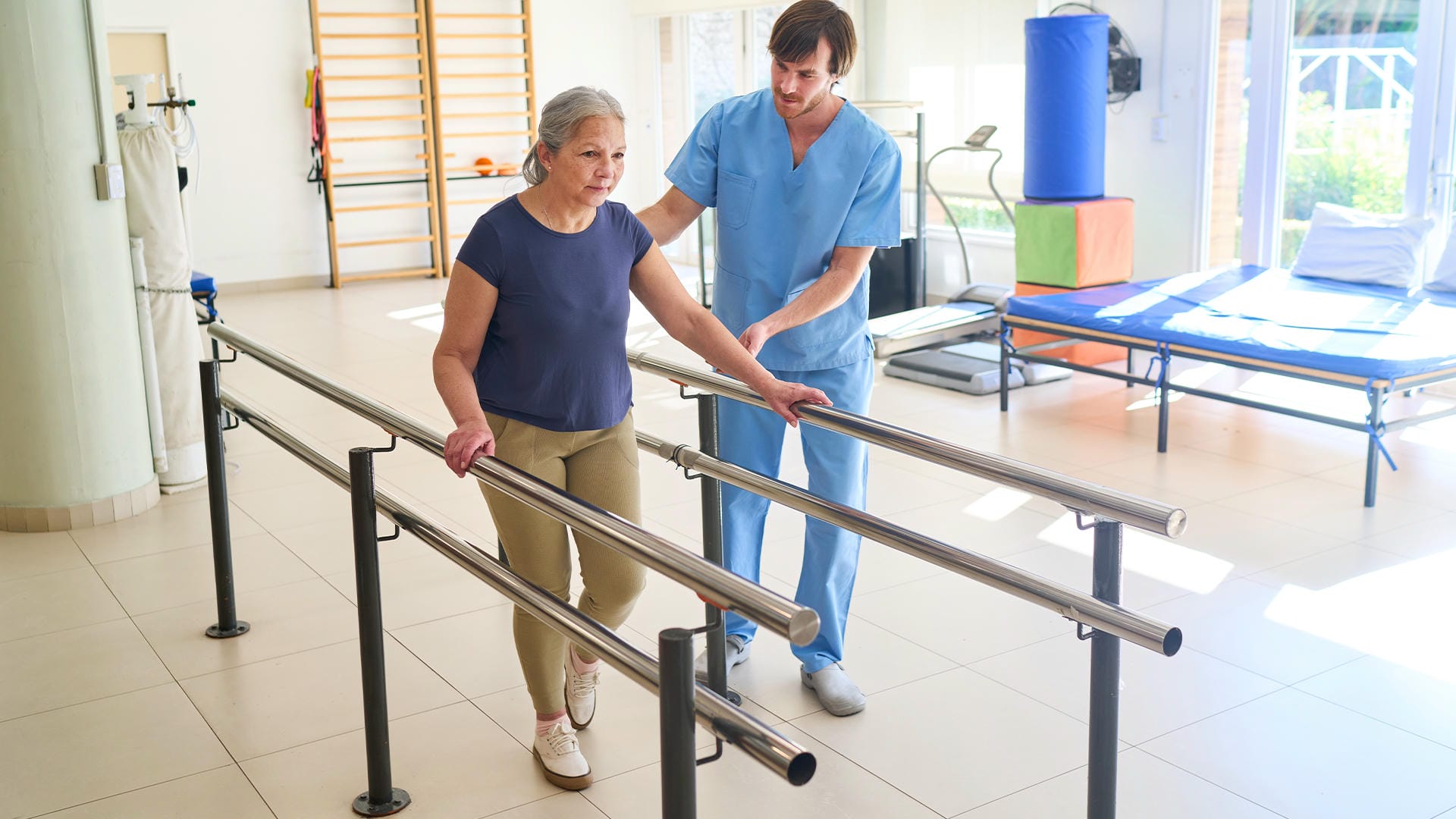
National Rehabilitation Awareness Week: Restoring Strength After a Cardiac Event at Brooklyn Center

At 9:10 in the morning, a patient may cross the therapy room without trouble. By lunch, the same walk can feel twice as long. That unevenness is common after a heart attack, cardiac procedure or difficult hospitalization. Muscles have lost conditioning. Sleep has been interrupted. A new medication schedule may still be settling in. Fear enters the equation too, especially after chest pain or sudden shortness of breath sent someone to the hospital.
National Rehabilitation Awareness Week falls on September 14–20 in 2026. Its theme, “Building Futures Through Rehabilitation,” sounds broad. In a post-acute setting, the future is usually more concrete: getting out of a chair without rushing, reaching the bathroom safely and having enough energy left to eat dinner.
“Harder than the first walk?”
“Only after the turn.”
That quick exchange belongs beside the blood-pressure reading. In early recovery, staff may check the resident at rest, repeat the check after a brief walk and wait to see how long the pulse and breathing take to settle. A rhythm reading or oxygen saturation may be relevant for one person and unnecessary for another. Orders and diagnosis decide that part.
Effort is less tidy. The Borg scale runs from 6 to 20; the neighborhood around 11 to 13 is described as light to somewhat hard. A resident can point to a number even when “tired” is the only word coming to mind. Beta blockers add a complication because the heart rate may rise less than expected. The monitor offers evidence, though it does not get the last word.
Another minute is often enough for one session. The pace can wait. New chest pressure, fainting or pronounced trouble breathing changes the encounter immediately: activity stops and the person is assessed. Persistent signs of a possible heart attack require an emergency response. Yesterday’s distance stays yesterday’s distance.
The question “How did therapy go?” may get a cheerful answer at noon. Ask again after dressing, lunch and a bathroom trip. The account can change. Nursing often sees that second version, hours after the formal session has ended.
Energy conservation sounds technical. In practice it can be almost mundane: sit for grooming, set out clothing first, rest before becoming exhausted and avoid stacking two hard chores together. Occupational therapy tests the routine. Physical therapy works on the strength and balance behind it. A longer walk is less useful when it consumes the energy needed for everything afterward.
Then Brooklyn weather interferes. A mild September morning can turn muggy by afternoon. The resident may leave a controlled hallway for front steps, a curb, a car transfer or a walk-up apartment. Planning around fatigue means rehearsing the trip that exists, including the awkward parts.
Three medication lists sometimes arrive with one patient: the old list from home, the hospital discharge sheet and the current orders. The names almost match. The doses may not. Medication reconciliation is the slow work of comparing them and getting a discrepancy clarified.
The explanation needs to survive outside the chart. What is this pill for? When is it taken? What happens after a missed dose? Which symptom earns a phone call? A resident who becomes dizzy on standing, unusually weak, swollen or suddenly less able to exercise should tell the clinical team. General online advice is never a reason to change a cardiac prescription.
For home, a printed schedule can be more useful than a clever app. Keep the current list in one known place. Tie doses to the prescribed times and meal instructions. Make sure the family is looking at today’s version. Small clerical errors have a way of becoming clinical problems.
A chart may say “150 feet.” Fine. Where does that distance take the resident at home? Perhaps from the bedroom to the elevator, followed by a long wait standing up. Six front steps may be harder than the entire hallway. Carrying a bowl from counter to table introduces another problem.
So the team measures more than distance. Sit-to-stands, turns, balance, stairs, the amount of help required and the time needed to recover can expose weak spots. Fewer pauses count. So does reaching the afternoon with enough reserve to get dressed for dinner.
Food and household habits enter quietly. Nutrition guidance may cover sodium, meal composition and any fluid instructions in the care plan. For a person with heart failure, a clinician may order daily weights because a sudden increase can accompany fluid retention. Sleep, stress and tobacco use get discussed too. A routine built over forty years seldom moves after one conversation.
Brooklyn Center
Buffalo Avenue is home to Brooklyn Center, where one resident can arrive with several problems tangled together. The center lists Cardiac Care, Short-Term Rehab, Stroke Care, Wound Care, Pain Management and Long-Term Care. Its cardiac pages also describe telemetry, EKG and echocardiogram capability, nutrition services and a suite for practicing activities of daily living.
The overlap is useful. A wound may have to be protected before a transfer. Pain can interfere with participation. Dressing practice may expose fatigue that a monitor did not. Each concern changes the next task a little. Recovery gets built through those adjustments. A diagnosis alone leaves too much out.
Centers Health Care provides rehabilitation, skilled nursing and long-term care for many kinds of recovery. Brooklyn Center’s services cover cardiac events, short-term rehabilitation, stroke care, wound care, pain management and longer-term support. The same answer will not fit every resident.
Home may be one person’s goal. Across the hall, the work is a steadier transfer or enough hand control to manage a meal. Some weeks go sideways. Staff reassess what changed and continue from there, without pretending that recovery runs on a tidy calendar.
Care. Support. Positive Outcomes. Centers Health Care.
Our Steps to Home series follows patients from the hospital through rehabilitation and back into the community. The home layout and available family help enter the discussion early. So do the ordinary jobs waiting there. Therapy, nursing and discharge planning keep returning to those details. One safe step has to work outside the gym, on an ordinary morning, with no one calling out the count.
Our Steps to Home series follows patients through rehabilitation and the journey from hospital to home: