After a Stroke: How Families Can Provide Stroke Recovery Support Without Overwhelming the Patient

Ask three relatives what good stroke care looks like after a stroke and somebody will say, “We do everything for him.” Understandable. After weeks of alarming phone calls and clinicians rushing through rooms, taking charge becomes a habit.
Then breakfast takes ten minutes. The survivor keeps chasing toast around the plate with a fork; his daughter could solve it in two seconds. Waiting feels almost rude. Yet the attempt uses his hand, vision and attention. Taking over removes all three.
Plenty may genuinely require help. More than half of stroke survivors 65 and older lose some mobility. Language, balance, pain and endurance can be affected too. Cognitive impairment, often invisible from the doorway, has been found in as many as 60% of survivors during the first year.
Stroke Recovery Support Begins With Permission
“Do you want help, or another minute?” returns a little control to someone who has recently had control taken away in dozens of ways. When choices are possible, offer two: the blue shirt or the gray one, therapy before a visit or after it. A six-item menu can feel like an exam.
Aphasia complicates the exchange. It affects language, not intelligence. Speak in an adult voice, keep one conversation going at a time and wait through the silence. Twenty seconds feels long in a busy room; count it anyway. A notebook, alphabet card, gesture or yes-or-no question may work better than repeating the same sentence louder. Check the answer back: “You pointed to the chair. You want to sit there?”
Visitors can wear out a patient while everyone is having a perfectly pleasant afternoon. Ask first, keep the group small and leave before the patient has to perform exhaustion for the room.
Leave Some Work for the Patient
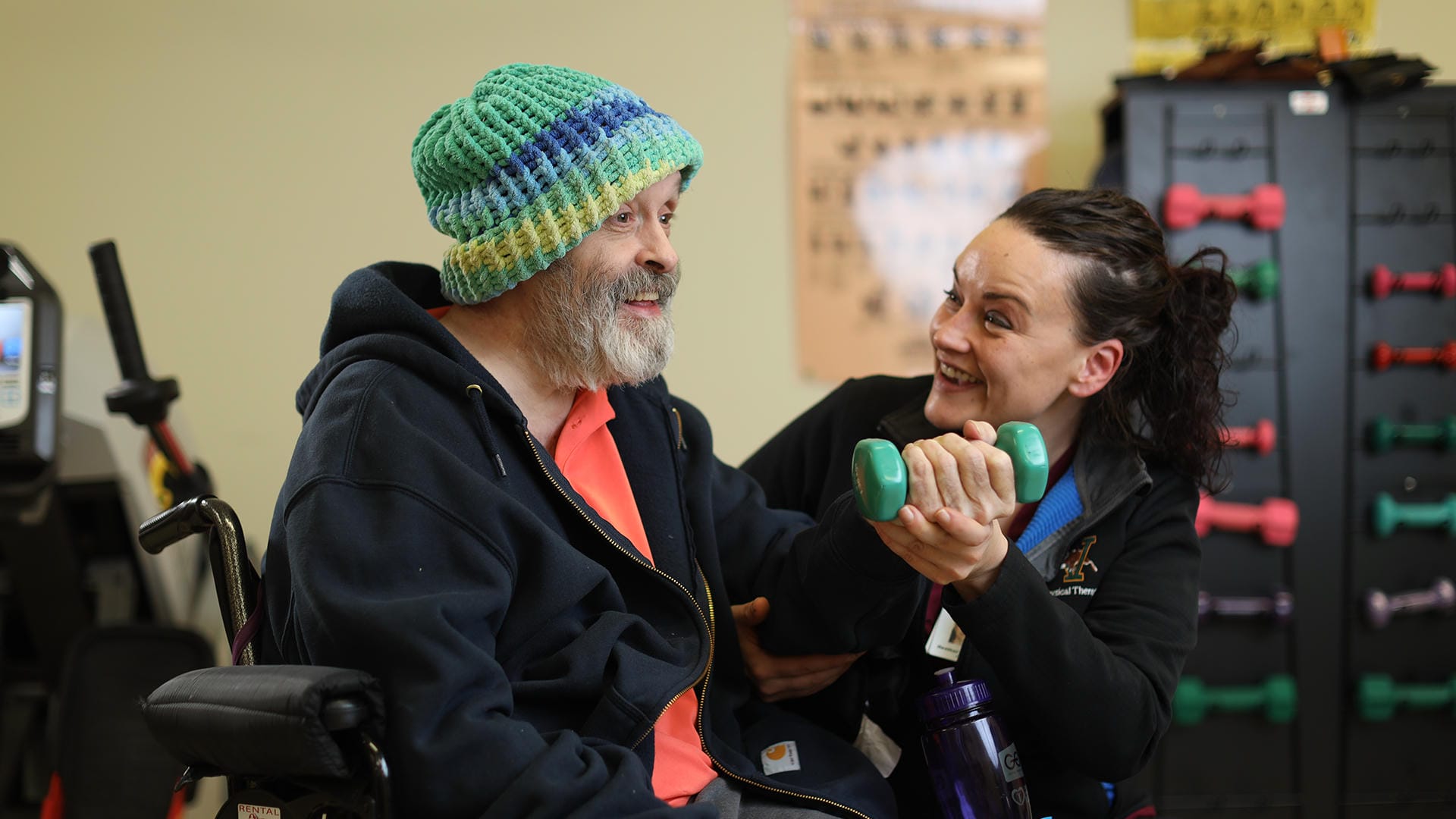
Buttons take forever. So does getting an affected arm into a sleeve. Those slow minutes may be occupational therapy continuing outside the gym, provided the task has been cleared as safe. Set up the clothing, steady the chair if instructed and let the patient handle the step he or she can manage.
The weak arm is not a handle. It can become one, though, when the patient starts sliding toward the edge of the bed and a family member reacts. That grab may injure a shoulder that is already sitting low in the joint, a problem called subluxation.
Watching a transfer once is not much preparation. The relative who will be helping should take the next turn while the physical or occupational therapist watches. Let the therapist correct the feet, the grip and the approach to the weaker side. If a gait belt belongs in the routine, this is where the family learns it. If it does not, nobody should add one after watching a video.
A good morning walk proves little about 3 p.m. Fatigue sets in. Someone with neglect may miss half the hallway. Balance and judgment fluctuate. Unless the therapist approved another lap and showed the family how, leave it.
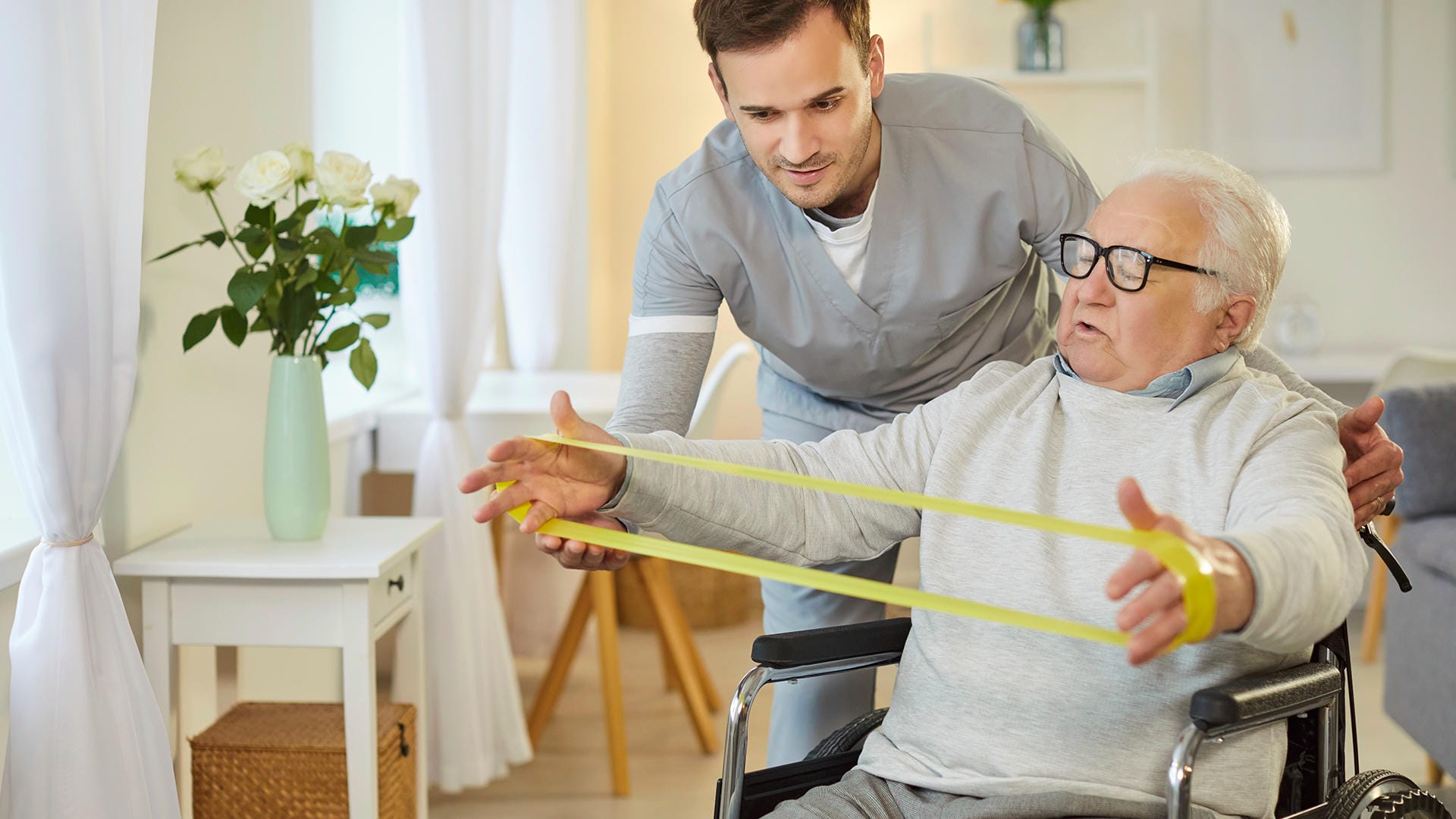
Ask for one or two approved tasks and the correct number of repetitions. Stop when form deteriorates, new pain appears or dizziness begins. Ten careful sit-to-stands are not interchangeable with twenty crooked ones.
Stroke Recovery Support Has to Respect Fatigue
The breakfast visitor leaves encouraged. He was talking, remembered a name and walked farther than yesterday. His niece comes after lunch and sees somebody else: few words, eyes closed, no interest in company. Neither account has to be wrong.
After a stroke, an ordinary conversation may take work. The tiredness may show up in the body, in speech or in the ability to follow what everybody is saying. Sometimes it goes on for a long while. Before calling it laziness, look at the week. Did the difficult afternoons follow therapy? A poor night? Three visitors at once? 50% to 70% of stroke patients have sleep-related breathing problems reported. Therefore, repeated daytime sleepiness is something to bring up immediately, rather than explain away.
And this is Far Rockaway in August. In July 2026, federal guidance issued, once again, put older adults and people with heart disease among those needing extra care during hot weather. Regardless if it’s extremely hot and humid outside or not, give fluids only in the form and amount the care team has approved. If the patient is suddenly much sleepier or has lost an ability that was there earlier, call the clinical team.
Know What Cannot Wait Until Tomorrow
Write down one time: when was the person last known to be well? Families tend to remember when they found the problem. The emergency team may need the earlier time.
When the dispatcher asks when the symptoms began, “just now” may mean when somebody noticed them. It is worth checking. Was the person speaking normally at 11:15? Could both arms be raised then? That is the last-known-well time.
When someone is showing an uneven face, a suddenly weak arm or garbled speech, that typically means that 911 needs to be contacted as soon as possible. These symptoms are given the mnemonic F.A.S.T.: Face, Arm, Speech, Time. Say that a stroke is suspected and give the earlier time. Do not start driving through Queens. Do not cancel the ambulance because the words sound clearer five minutes later.
There is another sort of call, less dramatic but still important. Perhaps the patient coughs through lunch, or the voice sounds wet after a swallow. Food may remain tucked inside one cheek. Stop there and report it; another sip is not a useful experiment. New shoulder pain, a patch of red skin that stays red or an abrupt change in mood also belongs in the update.
“He didn’t fall” can hide quite a story. His knee buckled beside the sink. Both hands shot out. Somebody caught him. Fine, no fall. The therapist still needs the rest of the sentence.
A near-fall rarely makes the family update. Nothing happened. Except the right knee buckled and the patient caught the sink with both hands. Write down that part.
New York expanded its older-adult fall-prevention work in late 2025. The program language is dry, but the questions are good. Has this happened before? Did a medication change? Is the trouble worse in dim light, on a rug or late in the day? STEADI screening likewise looks at gait, balance, medication and fall history. “He catches his toe in the bathroom doorway after dinner” is the sort of detail worth keeping.
Better Notes Make Better Stroke Recovery Support
“She had a bad morning” leaves a clinician guessing. “She needed two prompts to start dressing, stopped after seven minutes and reported pain at the shoulder” gives the team something usable. Record the time, task, symptom and what happened next. Include medication changes, though the family should never alter a dose or schedule without the prescriber.
Use teach-back before discharge or a weekend visit. Show the nurse or therapist how you understand the transfer, positioning or meal instructions, then let that clinician correct you. Nodding through a demonstration while mentally planning the ride home does not count.
The fastest gains often occur in the first three to four months, yet improvement may continue through the first and second year. Compare this Tuesday with last Tuesday. Yesterday may have been unusually good, or lousy.
Care. Support. Positive Outcomes. Centers Health Care.
At Far Rockaway Center, care after a stroke may draw on Stroke Care, Short-Term Rehab, Cardiac Care, Pain Management and Wound Care, according to the individual plan. A weak arm, painful shoulder, cardiac concern and skin problem do not politely wait their turn. The goal may be returning home, becoming steadier, staying independent or feeling more comfortable from one day to the next. Staff members stay with patients through progress, setbacks and the uneventful afternoons when practice is simply practice. Some gains are obvious across the room. Others show up when a patient fastens one button before anyone reaches over.
Steps to Home
Home enters the conversation before anybody packs a bag. Centers Health Care’s Steps to Home series deals in practical questions: Can the patient get out of bed? What happens at the front steps? Has the family practiced the transfer with a therapist? Meals, medications, communication and rest also have to work outside the facility.
By discharge, “doing better” is too vague. The family needs to know what the patient can handle, where hands-on help is required and whom to call if something changes.
Our Steps to Home series follows patients through rehabilitation and the journey from hospital to home: