Inside Our Pulmonary Rehab Program – Breathing Easier at Centers Health Care

Living in New York with breathing issues is… unforgiving. The city doesn’t slow down because your chest feels tight.
You still have the walk-up. You still have that hallway that somehow feels longer on bad days. One week it’s freezing wind that stings your lungs, the next it’s sticky heat that makes everything feel heavier. If you’re dealing with COPD, recovering after pneumonia, coming off a hospital stay, or still not right after COVID, the “small stuff” can start running the show.
A pulmonary rehab program is meant to change that. Not by “motivating” you. By rebuilding function with structure, monitoring, and skills you can actually use. You should leave with more than hope. You should leave with a plan.
What a pulmonary rehab program is really for
Here’s the problem nobody says out loud: you can be medically stable and still struggle.
Discharge papers don’t mean you can manage a shower without needing a break. Or walk to the dining room without doing mental math about where the nearest chair is. A lot of people start avoiding activity because it’s uncomfortable… and then they get weaker… and then they get more short of breath doing less. It’s a loop that feeds on itself.
A pulmonary rehab program is built to interrupt that loop.
The current COPD guidance is blunt about the value here. The 2026 GOLD pocket guide notes that pulmonary rehabilitation (including exercise training plus education) improves exercise capacity, symptoms, and quality of life across COPD severity levels.
That’s not marketing language. That’s “this helps people function better.”
Who typically benefits (especially in 2026)
Most people associate pulmonary rehab with COPD. Fair. It’s a big chunk of who gets referred.
But in 2026, referrals are wider than they used to be. Medicare explicitly lists eligibility not only for moderate to very severe COPD, but also for people with confirmed or suspected COVID-19 who have persistent symptoms including respiratory dysfunction for at least four weeks.
CMS also describes those COVID-related coverage revisions as part of its updates to pulmonary rehabilitation conditions of coverage (effective January 1, 2022).
So yes—if someone is still dealing with breathing issues weeks after COVID, pulmonary rehab may be on the table depending on clinical need and coverage.
What happens inside our pulmonary rehab program
Pulmonary rehab works best when it’s not vague. “Get stronger” isn’t a plan. “Walk from your room to the elevator without stopping” is a plan.
1) A baseline that’s about function, not just diagnosis
We start with where you are today. Not your best day last month. Not your worst day in the hospital.
What sets off breathlessness? After you exert yourself, how fast do you actually settle down? A minute or two… or are you still trying to catch your breath ten minutes later? And are there chores you quietly avoid now—showers, stairs, carrying groceries—because you know they’ll set you off?
2) Supervised conditioning that respects your lungs
People hear “exercise” and imagine being pushed until they can’t do it.
That’s not the point.
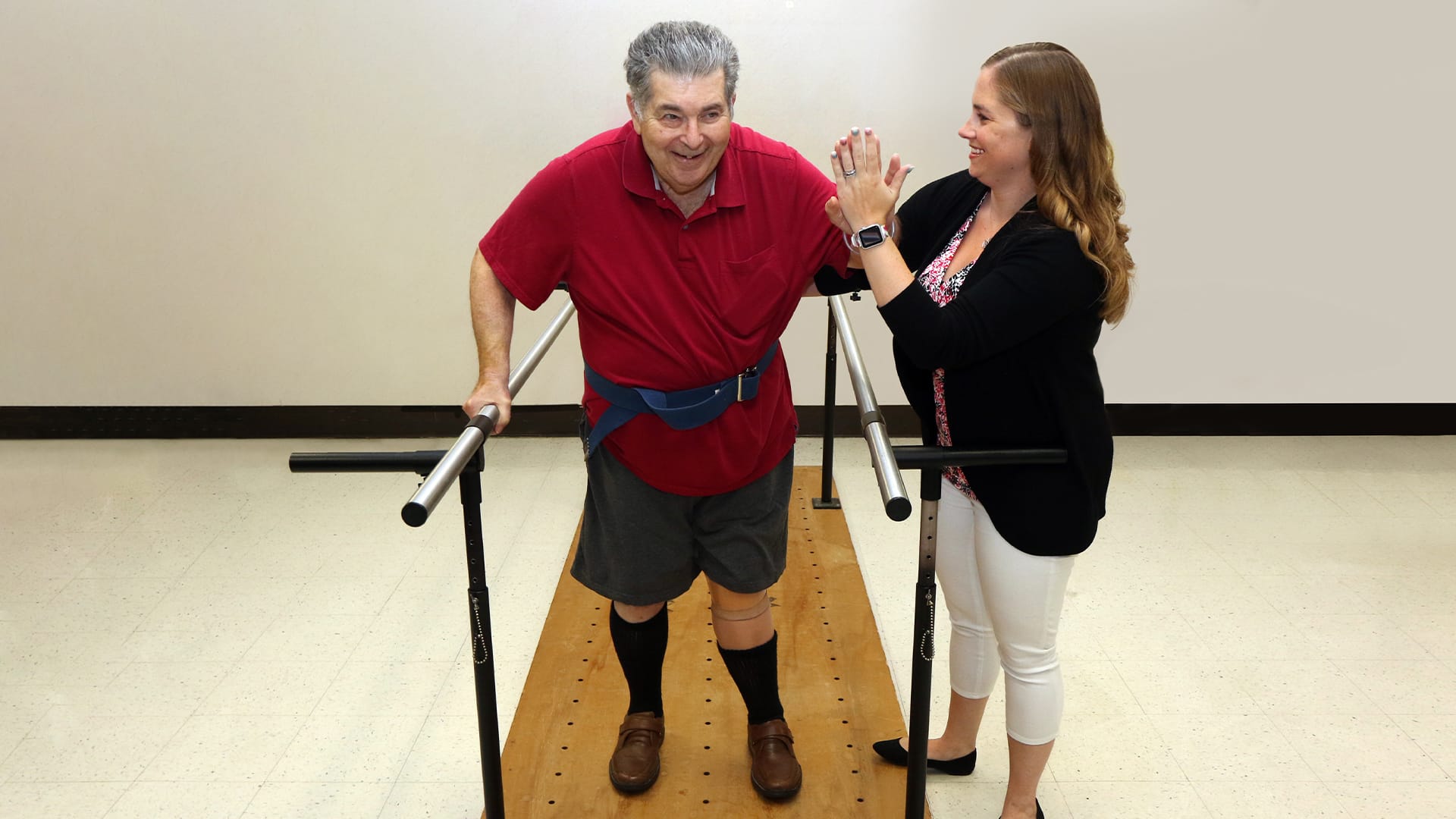
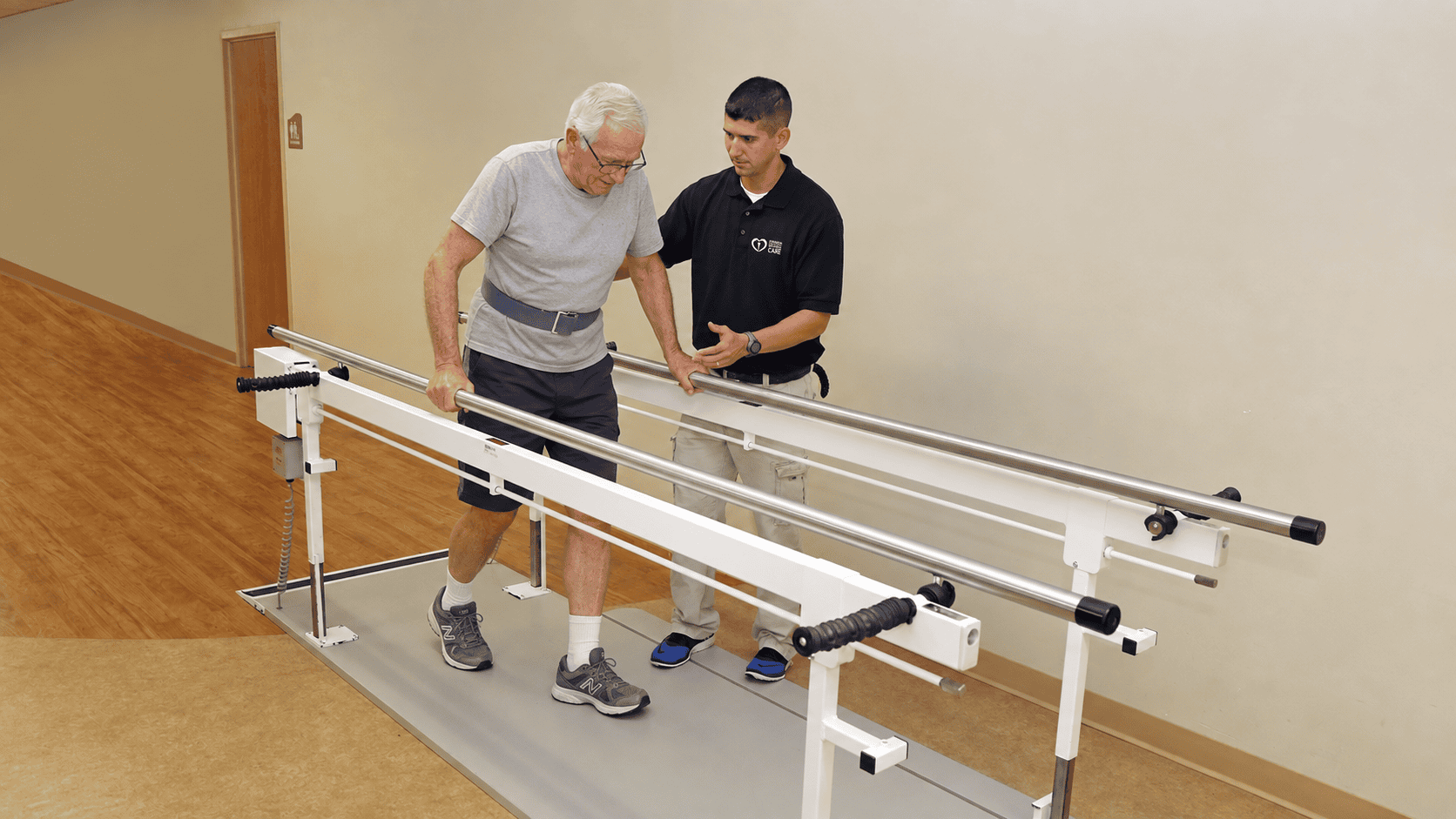
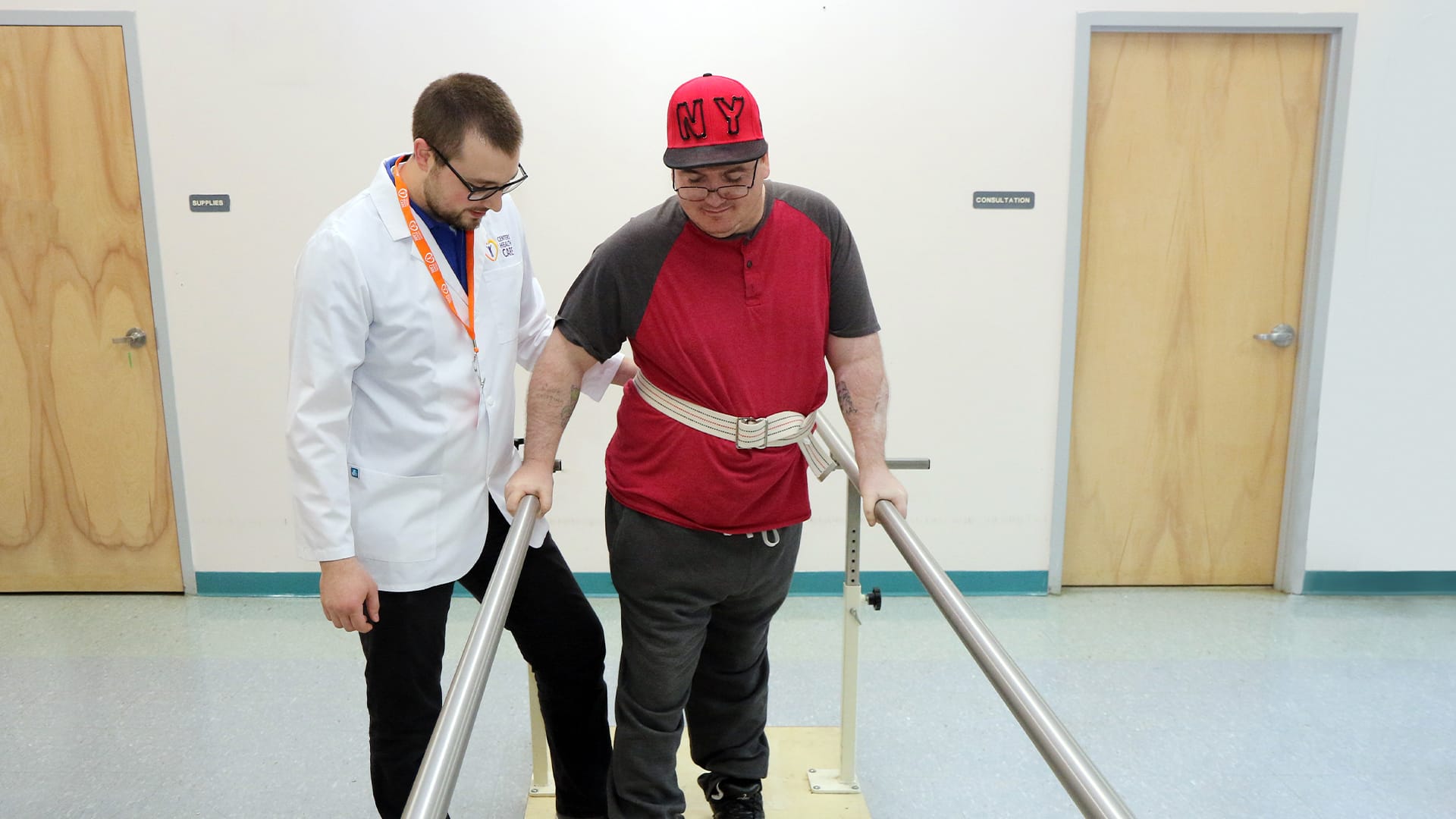
In a pulmonary rehab program, conditioning is controlled and progressive. The goal is to improve endurance and strength without triggering a flare-up or that awful breathless panic. Some sessions feel easy. Some feel annoying. A few feel like, “Wait… I did more than I thought I could.” That’s the sweet spot.
And strength training matters here more than most people expect. Weak legs and core make walking more expensive (in energy and oxygen). When those muscles get stronger, the same task can feel noticeably lighter.
3) Breathing techniques that you practice while moving
Breathing tips aren’t helpful if you only remember them after you’re already winded.
During therapy, patients learn breathing techniques and exercises intended to help them stay fit and manage exertion better.
The timing is important: you practice the technique during activity, not as an abstract lesson.
4) The “real life” piece: daily activities and energy control
This is the part patients often bring up later as the biggest win.
Our pulmonary care programming includes instruction on activities of daily living—like cooking and cleaning—in ways that don’t compromise breathing, along with guidance on proper nutrition.
That lines up with what American Lung Association emphasizes about daily life with COPD: tasks like dressing, bathing, and housekeeping can take more energy and leave you short of breath, and “energy conservation” (simplifying how you do tasks) can help you have more usable energy throughout the day.
Not glamorous, but very real. If you can get through a morning routine without needing to lie down after, your whole day changes.
5) Education that’s practical, not a stack of papers
Education in pulmonary rehab should answer the questions people actually live with:
- What are my early warning signs that I’m heading into trouble?
- What do I do first—before this becomes a hospital visit?
- How should I pace activity so I don’t “overdo it” and then crash for two days?
- What needs to be consistent (med timing, breathing practice, movement) even on a “meh” day?
Families usually feel it too. Once everyone knows what’s expected, what’s a red flag, and what to do first, the whole thing gets less chaotic. Fewer “Should we call 911?” moments over something that could’ve been handled earlier.
Where respiratory therapy fits
Here’s the quick distinction, because people mix these up all the time.
Respiratory therapy is the clinical side: oxygen setup and troubleshooting, nebulizer and inhaler routines, airway clearance when needed, and help with equipment like CPAP/BiPAP so it’s used correctly (and safely). A pulmonary rehab program is the training side: supervised conditioning, pacing, breathing techniques during activity, and practical coaching so everyday life gets easier—not just the numbers on a chart.
In New York, there’s also a basic credibility marker: any use of the titles “Respiratory Therapist” or “Respiratory Therapy Technician” requires licensure.
That’s through the New York State Education Department Office of the Professions.
For patients and families, it matters because respiratory care isn’t the place you want improvisation.
And in a solid pulmonary rehab program, rehab staff and respiratory therapy staff aren’t working in silos. The care plan should make sense as one picture.
Coverage notes that matter in 2026
Coverage varies by plan, but two points are worth keeping in mind:
- Medicare’s coverage page is explicit about eligibility categories (COPD and persistent post-COVID respiratory dysfunction).
- CMS has documented the COVID-related updates that recognize persistent respiratory dysfunction lasting at least four weeks as part of pulmonary rehab coverage criteria in certain settings.
And yes, the admin side is dull—but it’s worth doing early. Call the plan. Ask whether pulmonary rehab needs prior authorization, what the copay is, and how many sessions are covered. Getting that straight up front prevents the annoying “everything is ready except approval” delay.
The practical advice is boring, but it saves headaches: verify requirements early. Ask about prior authorization, copays, and session limits before you’re already mid-stream.
How you know the program is working
Progress here isn’t always dramatic. It’s usually quiet.
- You walk farther before needing a break.
- You recover faster after exertion.
- Stairs stop feeling like a threat.
- You handle a basic task—shower, getting dressed, making something simple to eat—without it wiping out your whole afternoon.
- And you stop living in that constant “where can I sit if I get winded?” mindset. You still respect your limits, but you’re not bracing for trouble every time you move.
Not every day improves. That’s normal. What you want is the trend.
Bottom line
A pulmonary rehab program is about getting more of your life back—measured in regular moments: walking, bathing, eating, climbing, carrying, sleeping, showing up. New York demands a lot from your lungs. Rehab is one of the few structured ways to push back safely.
And when respiratory therapy is integrated into that work—under New York’s licensure standards—you get something sturdier than “try harder.” You get coaching, monitoring, and a plan that’s realistic.
Fair. That line was slop. Use this instead:
Essex Center: Pulmonary Rehab in a Quieter Part of New York
Essex Center in Elizabethtown brings this pulmonary rehab topic into a more rural New York setting, where recovery has its own headaches. Up in Elizabethtown, the problems look different. A patient may be heading back to an older house, a longer driveway, colder air, or a follow-up visit that turns into half a day of effort. After pneumonia, COPD flare-ups, COVID weakness, or any hard respiratory episode, therapy cannot be run on autopilot. Some days the patient can do more. Some days a short walk tells you plenty. The trick is knowing when to push, when to slow down, and what the family is really going to see once the patient is home. Push too lightly and the patient does not gain much. Push too hard and the rest of the day can be shot. That is where a rehab setting like Essex can help, with staff watching how the patient handles movement, how long recovery takes afterward, and what the family should expect once the patient leaves. The work is not flashy. It is breathing, walking, resting, trying again, and making sure the plan still makes sense after discharge.
Care. Support. Positive Outcomes. Centers Health Care.
Centers Health Care provides rehabilitation, skilled nursing and long-term care for people with a wide range of needs. Whether someone is recovering from surgery, managing an illness or simply needs more support than can be provided at home, our staff is there to help.
The goal is not exactly the same for everyone. It may be returning home, becoming stronger, staying independent or simply feeling better and more comfortable from one day to the next. There will be progress, setbacks and difficult days along the way. Our job is to be there through all of it, and to help each patient or resident get as far as he or she can.
Sometimes that progress comes in large steps. More often, it comes in small ones. Either way, every step matters.
Our Steps to Home series follows patients through rehabilitation and the journey from hospital to home: