Physical Therapy After Hospitalization: How Therapy Helps Patients Regain Strength Before the Fall Routine Begins

Six days for pneumonia. That was the entire hospital stay for a woman in her eighties on Syracuse’s north side, discharged home the second week of July, and by the end of the month she still could not get out of her own recliner without a hand under each arm. The infection was gone. Her legs were a separate problem, and nobody had mentioned it on the way out the door.
Muscle doesn’t wait politely while an antibiotic finishes its work.
The Arithmetic Nobody Hands You at Discharge
Daily strength loss during bed rest runs somewhere between 1.3 and 3 percent by most estimates, stacking up to roughly a tenth of a person’s total strength inside a single week. The lower body absorbs the worst of it. Quadriceps and hip extensors, the muscles doing the actual labor of standing up, waste faster than arms or trunk.
Functional decline arrives quicker than the numbers suggest. Studies tracking hospitalized older adults documented measurable losses in mobility, transfers, toileting and grooming by day two of admission. Day two. Among patients followed from that point through discharge, two-thirds showed no improvement whatsoever, and a further slice kept sliding.
Cognition slows alongside it. Families usually clock that before they clock the weakness.
What Physical Therapy After Hospitalization Measures First
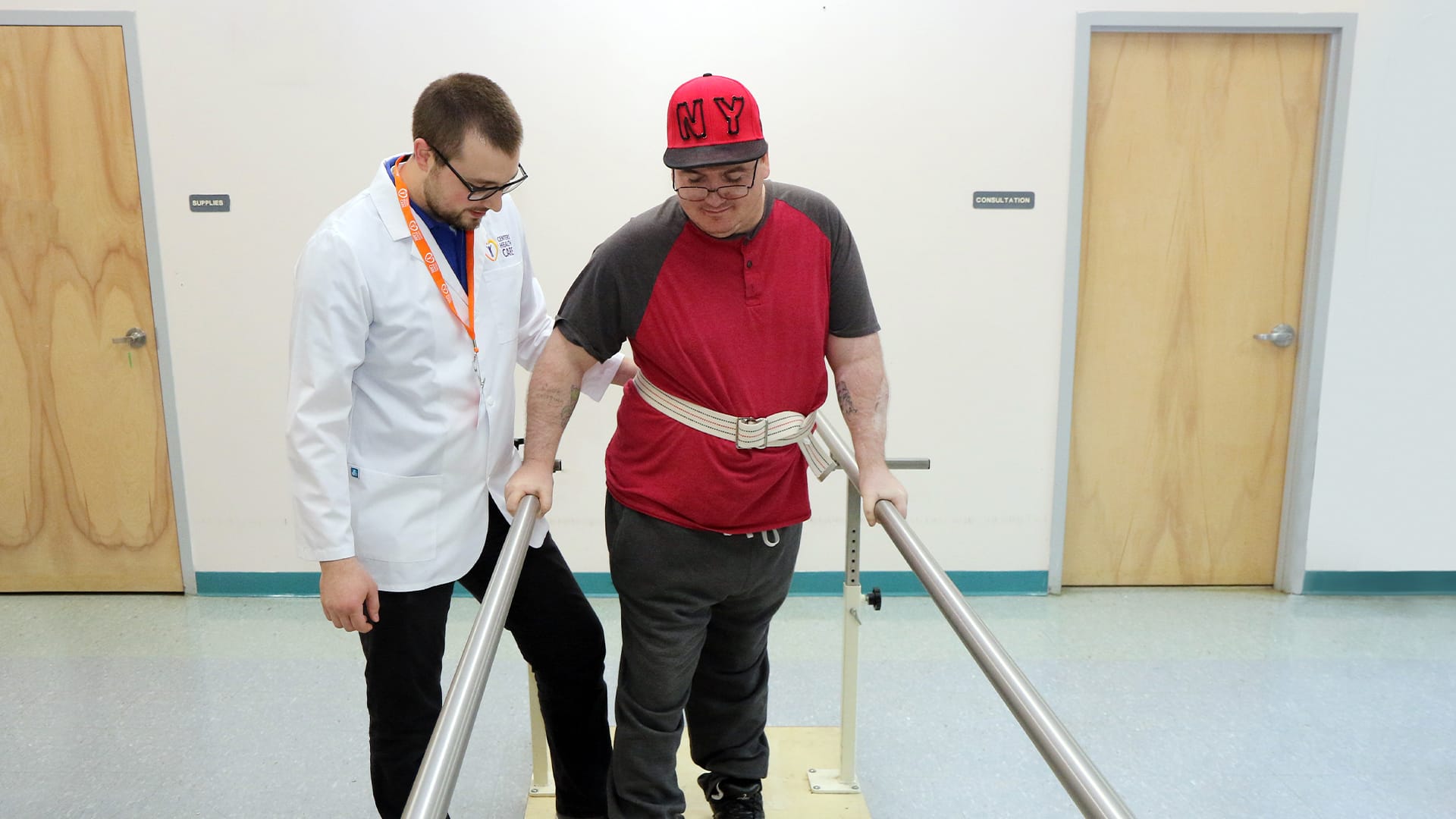
A therapist times you getting out of a chair. Three meters out, pivot, three meters back, sit down again. Twelve seconds is the line, and plenty of people coming off a week of pneumonia land at eighteen or twenty on the first attempt, which tells the staff considerably more than any conversation about how the legs feel.
Then arms folded across the chest, thirty seconds, count the stands. Balance testing narrows the stance in stages until the feet sit heel-to-toe.
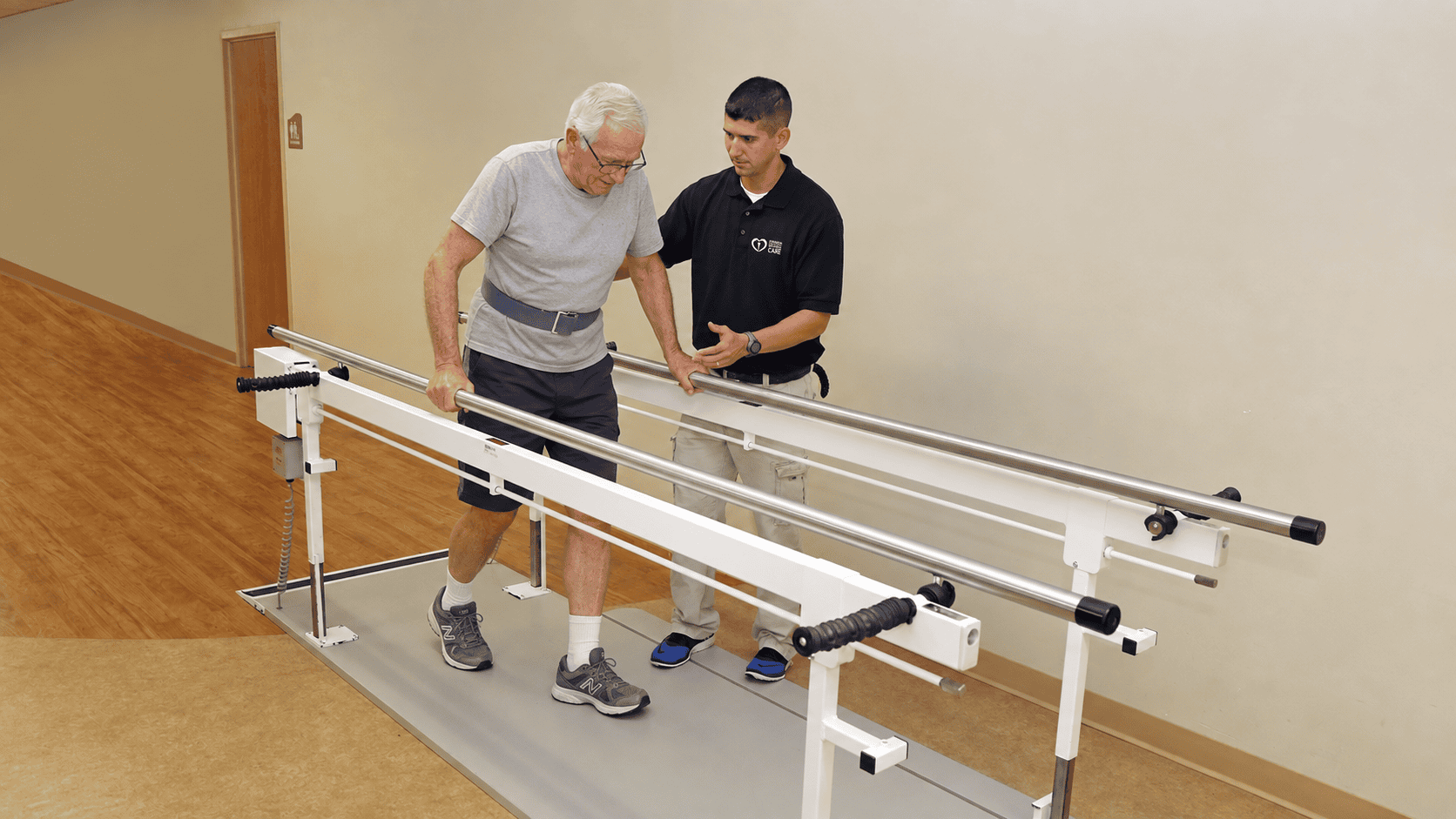
Gait speed gets the most attention around here. Under 0.8 meters per second and the odds of landing back in an emergency department climb steeply, so therapists across Onondaga County treat that figure as the one worth chasing week over week.
Autumn in Central New York Doesn’t Negotiate
Wet leaves on painted porch steps. Ice arriving in November before anyone has bought salt. Daylight quitting around 4:30. Then the whole apparatus of the season: apple picking, a Thanksgiving table in somebody else’s house with unfamiliar thresholds and a bathroom at the top of a staircase.
Look at what the state counts. In 2023, New Yorkers past sixty went to the hospital more than 78,000 times because they fell, and turned up in emergency departments better than 182,000 times for the same reason. Deaths in that bracket had climbed a quarter over six years. Fall prevention now sits in the state’s priority list running through 2030.
The location surprises people. Six of every ten of those hospitalizations start inside the house, on a rug or a stair tread or the lip of a shower, nowhere near the icy driveway everyone worries about.
Living rooms. Bathrooms. Not icy sidewalks, mostly.
Physical Therapy After Hospitalization Runs on Progressive Load
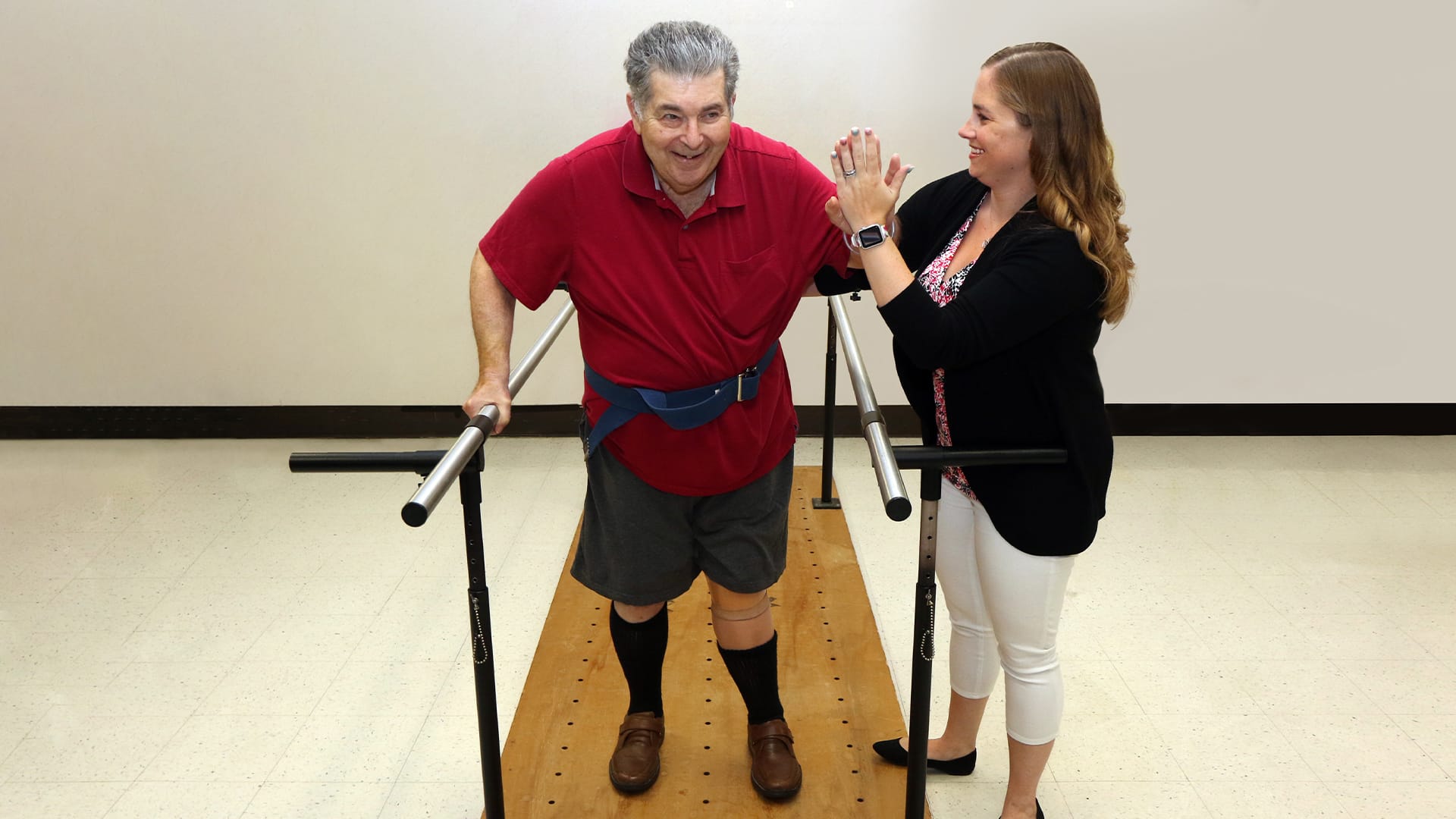
Gentle range-of-motion work earns its keep for about forty-eight hours. After that, muscle rebuilds only against resistance it has to argue with. Progressive resistance training three times weekly, ankle weights that climb, sit-to-stands starting from a raised surface and working down toward standard chair height, step-ups, controlled eccentric lowering. Otago-style balance sequences layer over the strength work rather than replacing it.
Protein gets attention too. Older muscle responds sluggishly to amino acids after an inactive stretch, so meals get built deliberately instead of arriving as whatever’s on the tray.
Occupational and Speech Therapy Carry Their Own Weight
Occupational therapy, part of short-term-rehab, picks up everything physical therapy walks past. Buttons. The particular contortion required to get into a tub. Reaching a counter from a seated position. Bishop maintains an ADL suite with a working bathroom, bedroom, kitchen and laundry, and that’s where a discharge plan stops being a document and starts being a rehearsal.
Speech therapy tends to catch families off guard. Swallowing musculature weakens with everything else, aspiration risk after an acute stay is high enough that screening is routine, and cognitive-communication therapy sits here as well for residents still reassembling their sequencing after a bout of delirium.
Wound care runs underneath the whole schedule. Pressure injuries from an immobile stretch, surgical sites refusing to close, venous ulcers on legs elevated for weeks. An unhealed wound will stall therapy faster than any other single factor, so it gets managed in parallel. Subacute care holds the medical complexity steady while the rest of it proceeds.
Care. Support. Positive Outcomes. Centers Health Care.
Rehabilitation, skilled nursing, long-term care. Centers Health Care handles all three, for people whose situations rarely fit neatly into one. Someone shows up ten days after a hip replacement. Someone else has a wound that stopped closing back in June, or a swallow that isn’t working the way it used to, or a house that stopped being manageable somewhere along the line. Our staff takes each of those as it comes.
The goal is not exactly the same for everyone. It may be returning home, becoming stronger, staying independent or simply feeling better and more comfortable from one day to the next. There will be progress, setbacks and difficult days along the way. Our job is to be there through all of it, and to help each patient or resident get as far as he or she can.
Sometimes that progress comes in large steps. More often, it comes in small ones. Either way, every step counts.
Bishop Rehabilitation and Nursing
On James Street in Syracuse, Bishop Rehabilitation and Nursing delivers physical, occupational and speech therapy alongside subacute care and wound care, with an ADL suite built for practicing the ordinary business of a household before anyone goes home to one. Local hospitals send complex, comorbid cases here for a reason. Physical therapy after hospitalization at Bishop is measured, documented and adjusted weekly against the person’s own numbers rather than a template.
Steps to Home
Going home is the point. Every therapy session, every gait speed retest, every practice run through the ADL kitchen is aimed at the front door of a specific house with a specific number of steps leading up to it. Our team maps that house before discharge, works the transfers a person actually performs there, coordinates equipment and follow-up, and sends families out with a plan they can execute on a Tuesday afternoon in October without calling anybody. Some residents walk out. Some roll out. The direction is the same.
Our Steps to Home series follows patients through rehabilitation and the journey from hospital to home: