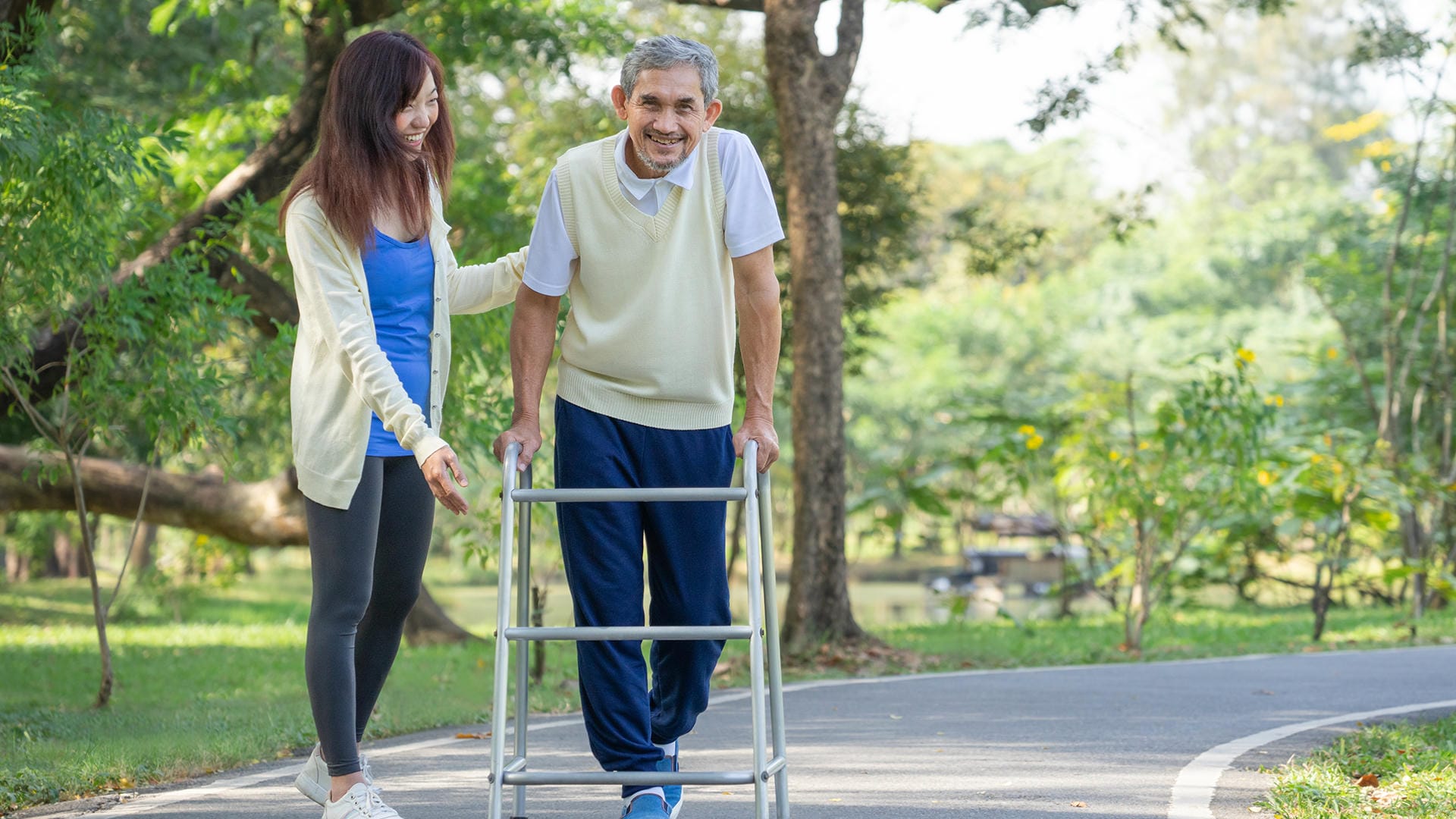
Stroke Recovery in Hot Weather: Routines That Help Residents Stay Safe

July in New York doesn’t announce itself gently to a body still relearning how to regulate its own temperature. A stroke can knock out the autonomic signals that used to handle sweating and vasodilation without anyone thinking twice — so when humidity sits at 85% and the asphalt outside is radiating heat back up at dusk, recovery routines that worked fine in April suddenly need recalibrating.
Why Stroke Recovery in Hot Weather Looks Different From Routine Summer Care
The brainstem and hypothalamus handle most of the body’s heat regulation, and a stroke doesn’t have to hit those exact spots to throw the system off. Sometimes it’s simpler than that — a resident can’t reach across the room to grab water, can’t peel off a sweater without help, and the deficit becomes mechanical rather than neurological. Diuretics complicate things further. So do beta-blockers, both common after stroke, both working against the body’s cooling response in different ways. One nurse manager at a Bronx facility put it bluntly during a June staff huddle: patients who looked rock-solid on their March vitals start drifting once the thermometer clears 90, and nobody notices until someone checks twice in one shift instead of once.
There’s also the mimicry problem. Heat exhaustion brings confusion, slurred speech, weakness on one side if blood flow shifts unevenly — symptoms that overlap uncomfortably with the warning signs of a second cerebrovascular event. Staff trained in stroke recovery protocols know not to assume it’s “just the heat” without a full neuro check. That instinct, drilled into 2026 care teams through updated FAST-ED screening refreshers, has caught more than one early TIA that would’ve otherwise been written off as dehydration.
Hydration Isn’t Optional, But It’s Not Simple Either
Dysphagia complicates the obvious fix. Plenty of stroke survivors deal with it, mild in some cases, severe in others, and “just drink more water” runs straight into a swallowing problem that water makes worse, not better. Thin liquids go down wrong for residents with deficits, so July hydration usually means thickened fluids instead, small volumes on a schedule rather than waiting for thirst — which post-stroke patients often don’t register properly anyway — plus nursing staff watching intake-output numbers closer than they would in cooler months. Speech-language pathologists have pushed harder this season on IDDSI-level fluid adjustments. Humidity raises the body’s fluid needs across the board. Swallow safety doesn’t move an inch to accommodate that.
Electrolyte balance matters here too, particularly sodium. A resident on a low-sodium cardiac diet who’s also losing more fluid through perspiration needs that balance watched, not loosened — loosening it solves one problem and risks another.
Therapy Timing Shifts When the Thermometer Climbs
July changes the clock for therapy. A 1pm PT slot that worked fine in March gets pushed to 9am once gym temperatures start climbing past what’s comfortable for someone relearning how to walk. Gait drills, balance work, the unglamorous repetition that actually rebuilds motor pathways — none of it holds up once a resident’s core temp starts inching upward mid-session. One adjustment showing up more this summer: a forty-five minute block gets chopped with a five-minute breather built in, not because the therapy got easier, just because nobody wants a resident pushed into heat strain over a balance exercise.
Walking programs outside used to run on a simple rule — check the temperature, decide if it’s too hot. That’s not how 2026 planning works anymore. Heat index is the number that actually counts. Ninety-one degrees with dry air behaves nothing like eighty-four degrees soaked in humidity, and a program built around reintegration goals has to track both, daily, rather than glance at one number and call it done.
The Skin Problem Heat Makes Worse
Residents with limited mobility post-stroke already carry elevated pressure injury risk. Heat compounds it. Sweat accumulates in skin folds and under braces or splints, moisture breaks down skin integrity faster, and a resident who can’t reposition independently needs more frequent turning schedules in July than in January. Wound care teams have adjusted protocols this summer to include moisture-barrier applications specifically timed around peak heat hours, plus more frequent skin checks for residents wearing AFOs or upper-extremity splints that trap heat against the limb.
Cognitive Load and Heat: An Underdiscussed Piece
Anyone who’s sat through an August blackout trying to focus on a phone call knows what heat does to concentration, and that’s a brain working at full capacity. Stroke survivors managing executive function deficits don’t have that margin. The heat tax shows up as fog, slower reaction during a therapy task, sometimes irritability that a visiting family member reads as backsliding when it’s really just the building running ten degrees warmer than usual. Some teams have started shuffling cognitive rehab to the cooler half of the day. Not a universal fix, but it’s something.
What Families Should Watch For This Summer
A few signs warrant immediate attention rather than a wait-and-see approach: sudden new weakness or facial drooping (always, heat or not, a call-911 situation), unusual lethargy that doesn’t resolve with rest and fluids, skin that’s hot and dry rather than sweaty (a heat stroke red flag distinct from typical heat exhaustion), or confusion that’s notably worse than baseline. None of these should get chalked up automatically to “it’s just hot out.”
Bronx Center has built its stroke recovery programming around exactly this kind of seasonal nuance. The team there runs coordinated short-term rehab alongside dedicated stroke care, with physical, occupational, and speech therapists working in tandem to adjust pacing, hydration protocols, and skin monitoring as conditions change through the year. Residents recovering from stroke at Bronx Center also have access to cardiac care, pain management, orthopedic care, wound care, and long-term care services under one roof, which matters when recovery involves more than one system at a time. Learn more about stroke care and short-term rehabilitation at Bronx Center.
Care. Support. Positive Outcomes. Centers Health Care.
Centers Health Care provides rehabilitation, skilled nursing and long-term care for people with a wide range of needs. Whether someone is recovering from surgery, managing an illness or simply needs more support than can be provided at home, our staff is there to help.
The goal is not exactly the same for everyone. It may be returning home, becoming stronger, staying independent or simply feeling better and more comfortable from one day to the next. There will be progress, setbacks and difficult days along the way. Our job is to be there through all of it, and to help each patient or resident get as far as he or she can.
Sometimes that progress comes in large steps. More often, it comes in small ones. Either way, every step matters.
Our Steps to Home series follows patients through rehabilitation and the journey from hospital to home: