The Future of Rehab — How BlazePod Therapy Is Changing Recovery
Rehab can get repetitive fast. You do the same warm-ups, the same rehearsed steps, the same “one more set.” Progress is happening, but on a rough day it doesn’t register—you’re sore, wiped, and not exactly thrilled to run the loop again.
That’s where BlazePod therapy earns its spot. Instead of doing movements in a vacuum, patients respond to light cues—step here, reach there, tap now. The drill becomes a reaction task, not a checklist. And that subtle shift matters: timing improves, attention stays on, and the session has a clear target beyond “do ten reps.”
At Centers Health Care, BlazePod is used within our Steps to Home approach—alongside hands-on therapy and goal-driven planning—so patients build steadiness and confidence with the same end point in mind: function that carries over when they’re back home.
What is BlazePod therapy?
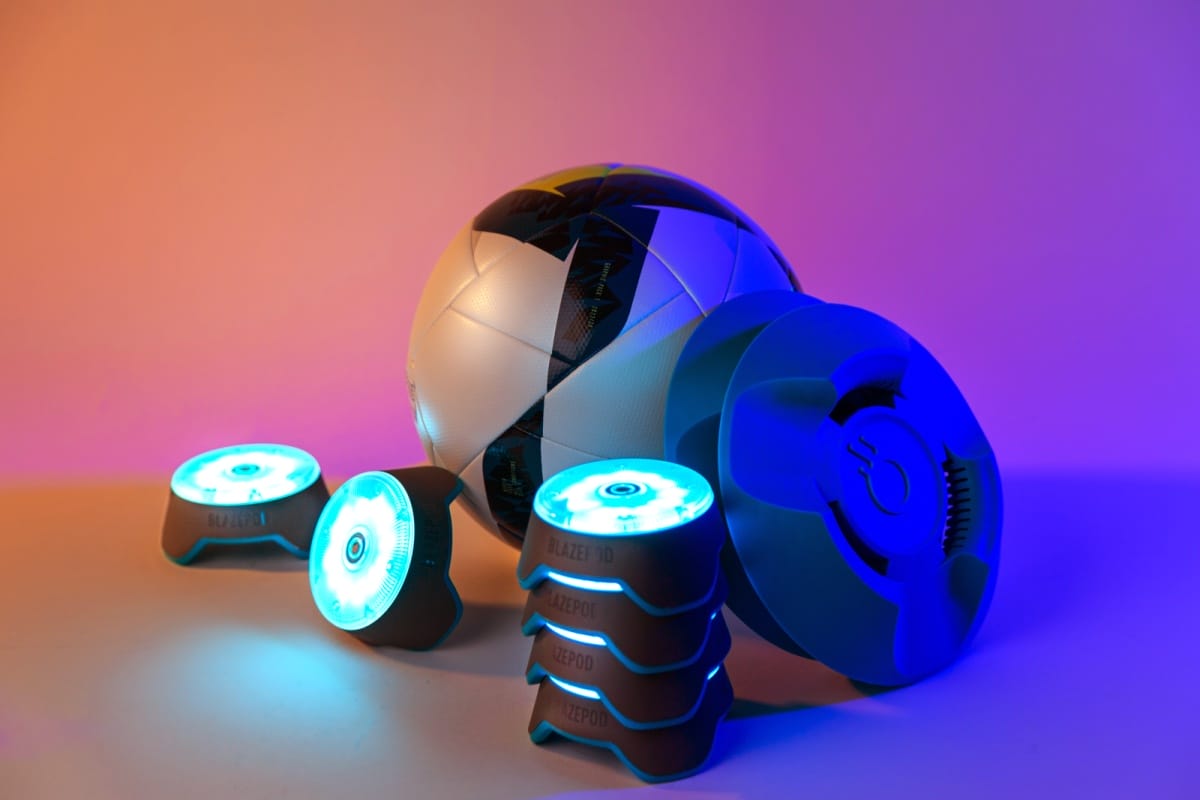
BlazePod is a set of small wireless “pods” that light up in different colors and patterns. They’re touch-sensitive, so the patient responds by tapping, stepping, or reaching to the lit pod. A therapist controls the drill through an app and can adjust the speed, the number of targets, and the rules.
That basic setup is deceptively useful. It can train:
- Reaction time — that split second between noticing something and your body actually responding.
- Foot placement and balance
- Hand-eye coordination
- Decision-making under movement (right hand for red, left foot for blue, don’t touch green, etc.)
Those “rules” are not just for fun. They mimic real life, where you’re constantly making small decisions while you move: stepping around a rug edge, turning into a doorway, carrying something while scanning where your feet are landing.
Why this matters in short-term rehab in New York
In New York, discharge decisions don’t sit on the shelf for a week. Plans get made quickly, changed quickly, and sometimes rewritten mid-day. Families are coordinating updates from the hospital, rehab options, work schedules, transportation, and insurance questions—often all at once, and rarely in a quiet moment.
BlazePod works well in that setting because it’s easy to scale. A therapist might start with seated targets on day one, then move to standing balance drills, then build up to faster stepping patterns or “think-and-move” tasks once the patient can handle more challenge without losing form. That helps keep the program moving forward without guessing.
Centers describes BlazePod as “an interactive training system” used in therapy to improve balance, coordination, and mobility—part of the broader Steps to Home model.
Who can benefit?
BlazePod therapy isn’t for one diagnosis. It’s for goals. Here are three common groups where it can be especially helpful:
1) Stroke and neurological recovery
After a neurological event such as a stroke, movement can feel off in ways people don’t expect. It’s not only weakness. Timing can be delayed. Spatial awareness can be fuzzy. A step that used to be automatic suddenly requires concentration.
Light-based cueing gives therapists a clean way to train those missing pieces: scanning, controlled reaching, accurate foot placement, and safe turning. Those are the skills that show up immediately when someone has to pivot in a hallway, step around a chair leg, or move through a room without grabbing for the nearest surface.
Research is also trending in this direction. A 2025 study of a four-week agility program using light-based equipment in people with Parkinson’s disease reported significant improvements in overall balance and turning ability, and participants stayed highly motivated during training. (One study in this area was small and didn’t include a comparison group—so don’t treat it like a final verdict. Still, it matches what a lot of clinicians notice in the gym: people tend to stay more engaged when the drill feels interactive and the feedback is immediate.)
2) Orthopedic rehab (post-surgery or injury)
After a hip or knee replacement—or after a fracture—rehab is more than “getting stronger.” It’s rebuilding mechanics: how you stand, how you load the leg, how you time the step, how you turn without cheating the movement. Confidence is part of it too, because nobody walks naturally while bracing for pain or waiting for the knee to “give.”
BlazePod drills can be scaled to match that progression—steady targets early on, then quicker stepping patterns and controlled changes of direction as stability improves.
3) Older adults working on fall prevention and stability
For seniors, stability is about more than leg strength. It’s also about reacting fast enough to catch yourself when something changes. That’s one reason visual reaction training has become more popular.
A 2025 randomized controlled trial in Scientific Reports studied balance-based visual reaction time exercises in older adults and used the BlazePod system as part of reaction-time evaluation. The intervention group improved reaction time and physical performance measures, and also reported less fear of falling compared with controls.
What a session can look like
There’s no single “BlazePod protocol,” which is good. A clinician can tailor drills to a patient’s ability and the day’s safety needs. A few simple examples:
- Seated reach and tap: pods on a table at different distances for trunk control and coordination
- Step-to-target: pods on the floor to train weight shift, stepping accuracy, and balance
- Color rules: respond with the correct hand or foot based on color, and ignore a “no-go” color for inhibition and attention
Clinicians share variations like these specifically because they’re easy to grade up or down.
Why it works (without pretending it’s magic)
BlazePod doesn’t replace skilled therapy. It doesn’t replace strengthening, gait training, manual techniques, or the clinical judgment that keeps rehab safe.
What it does add is a clean feedback loop:
- The patient gets instant cues and a clear “did I hit it?” moment
- The therapist can adjust difficulty quickly and keep the challenge in the right zone
- Progress can be seen in timing and accuracy, not only in “it looks better today”
That combination—engagement plus measurement—can be powerful. Patients often try a little harder when the task feels real and they can see improvement. And when motivation improves, attendance and effort tend to improve too (which is half the battle some weeks).
Bottom line
BlazePod therapy is one of those tools that looks simple until you watch it used well. A set of lights becomes balance training. A quick tap becomes coordination work. A simple color rule can turn into a practical test: see the cue, choose correctly, move cleanly. That’s closer to real life than it sounds. Daily movement is full of small decisions, made while you’re already in motion.
When you tour a rehab unit or speak with the therapy team, ask one simple thing: what are you actually working on with this? Balance? Turning? Safer stepping? Then ask how they’ll know it’s improving. Rehab shouldn’t be a vibe. It should be measurable.
Medical note: This is general info. Your PT/OT and medical team can tell you what’s safe and appropriate for you.
You’re right. That line about tech “earning its keep” was trying too hard.
Try this instead:
Deptford Center: Rehab Technology, Without the Showmanship
Deptford Center on Clements Bridge Road gives the BlazePod piece a practical New Jersey angle. The facility already talks about rehab as tech-driven and individualized, with tools like Jintronix and the Sci-Fit Bike-in-Place system used alongside regular therapy work. So BlazePod fits that same lane — not as a shiny toy, but as something a therapist can use to make a session sharper. A patient has to react, shift weight, reach, tap, step, and reset. Some people need that after an orthopedic injury. Some after a stroke. Some after a hospital stay that left them weaker than they expected. The useful part is that the therapist can see what is actually happening in the moment: hesitation, balance trouble, slow reaction time, fatigue, or maybe better movement than yesterday. Deptford also lists onsite medical staff, skilled nurses, therapists, and EMR-based communication, which helps because rehab does not happen in a vacuum. What happens in the gym has to match what nursing and the medical team are seeing the rest of the day. That is where the technology has value. Quietly. In the work itself.
Facility details based on Deptford Center’s published rehab, technology, onsite medical staff, and communication information.
Watch it in action: Steps to Home
Centers Health Care has been sharing real rehab stories through the Steps to Home video series. If you want a feel for the program and the kind of therapy experience patients describe, here’s an episode to start with.