World PT Day 2026: Physical Activity After Stroke at Ellicott Center | Stroke Rehabilitation Buffalo NY
Four steps. Turn. Reach back for the chair. What used to happen without thought can feel like a string of separate instructions after a stroke. Strength is part of it, though often so are timing, vision, balance and awareness of the weaker side. Even clearing one foot from the floor may take fierce concentration.
World PT Day arrives September 8 with cardiovascular disease and stroke as its 2026 focus. The campaign’s numbers are fairly blunt. One person in four will experience a stroke over a lifetime. It also reports that a half hour of exercise on five days each week can cut stroke risk by 25 percent. Useful information, certainly. For somebody already recovering, though, “exercise more” explains almost nothing. The right activity begins with the person, the impairments and the next necessary task.
What Stroke Rehabilitation Buffalo NY Looks Like in Practice
Straight line first. Then a turn, a doorway and the chair waiting at the other end. A person may handle the first part and become unsteady on the pivot. Someone else has the muscle to stand yet gets stuck organizing the sequence. Pain, fatigue or a wound can change what is sensible that morning.
The assessment puts numbers around some of this. A therapist might time 10 meters, see what distance is covered in six minutes or use the Timed Up and Go: rise, walk a short course, turn, come back and sit. Then come the details a stopwatch misses. Where did the foot land? Did the trunk lean? Was the device used safely?
A useful goal grows out of that evidence. Perhaps it is the dining room, one doorstep or the bathroom after dark. Ten additional feet may be a sizable gain. Standing once with less help may be another.
Why Repetition Drives Stroke Rehabilitation Buffalo NY
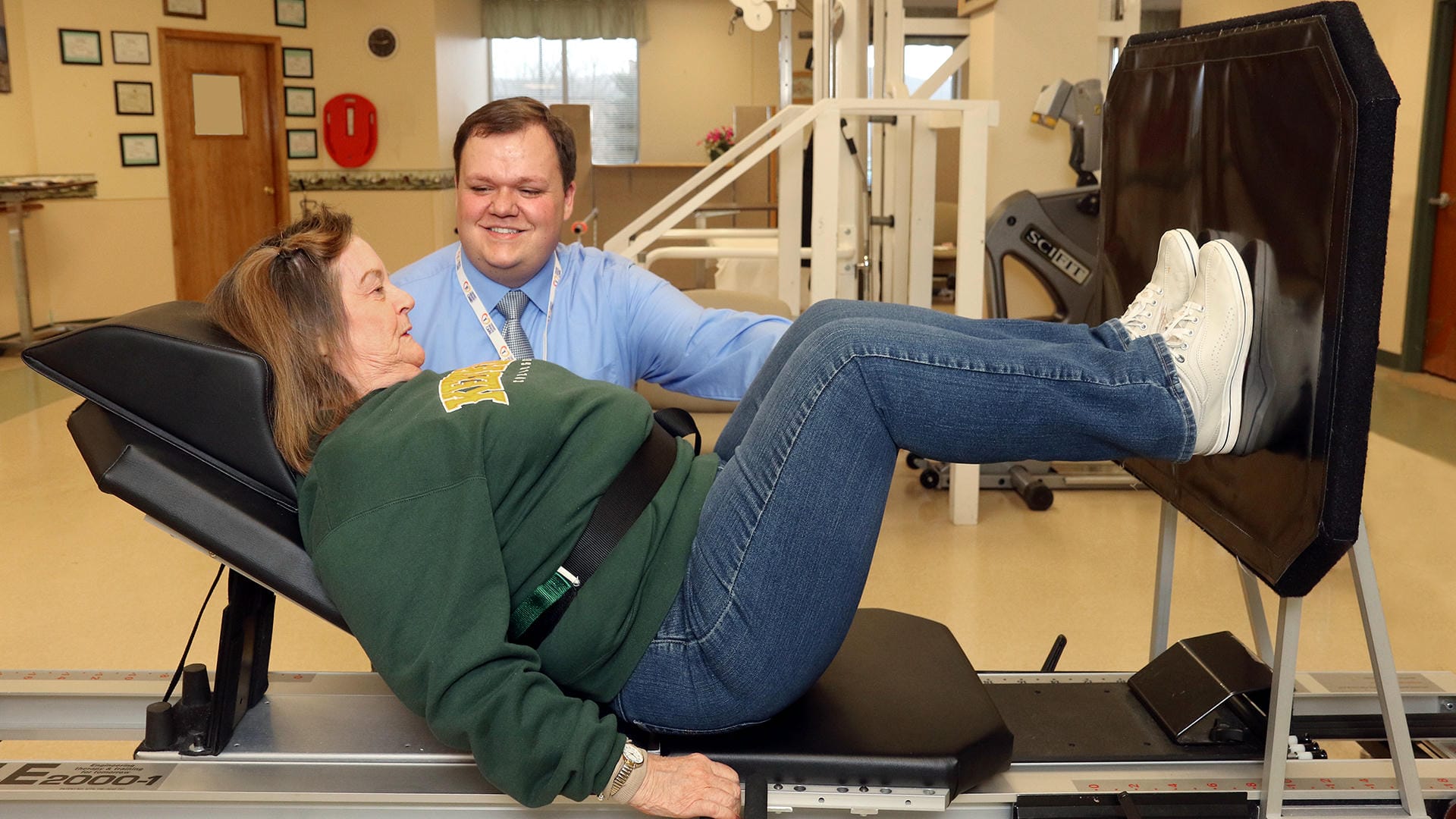
The nervous system learns through practice. Current guidance favors work that is repetitive, progressively adjusted, task-specific and tied to a goal. A patient who wants to rise from a kitchen chair needs practice with the task itself: moving forward, placing the feet, shifting weight and standing. General strengthening may help. It does not replace rehearsal.
Repetition should not mean 30 careless attempts. Once the knee starts buckling or the body twists to compensate, another attempt may reinforce a poor pattern or raise the chance of a fall. A therapist can change the seat height, hand support, number of attempts or rest interval. Later, the same skill may be practiced from a softer chair or under different lighting. Homes rarely resemble therapy gyms.
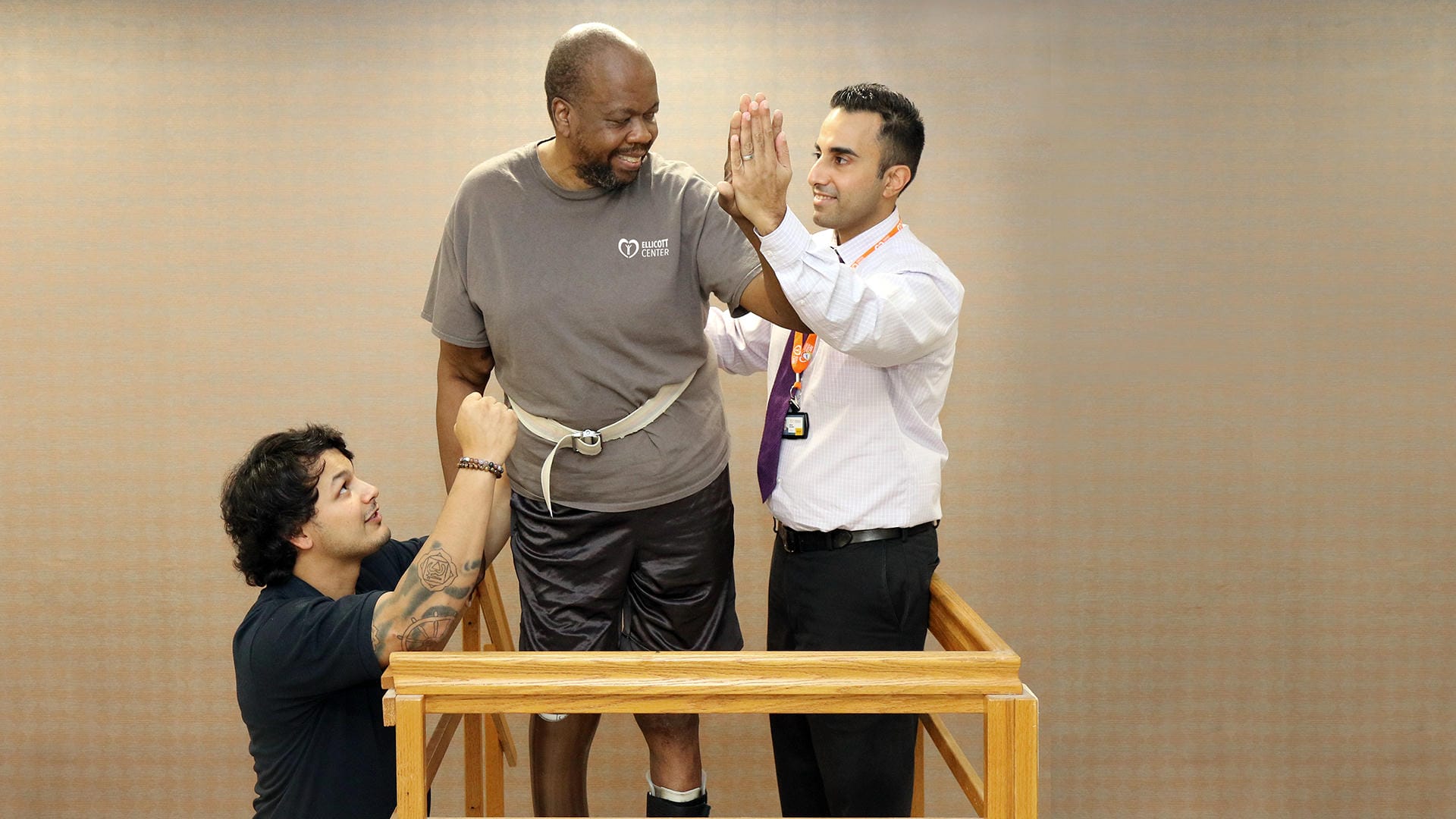
Walking may begin with short bouts focused on foot clearance, step length or weight transfer. Turns, doorways and surface changes come later.
Balance Work Without Guesswork
Balance goes beyond staying upright while standing still. Anticipatory control prepares the body before a reach or step. Reactive control is the quick correction after an unexpected shift. Stroke can disrupt either one.
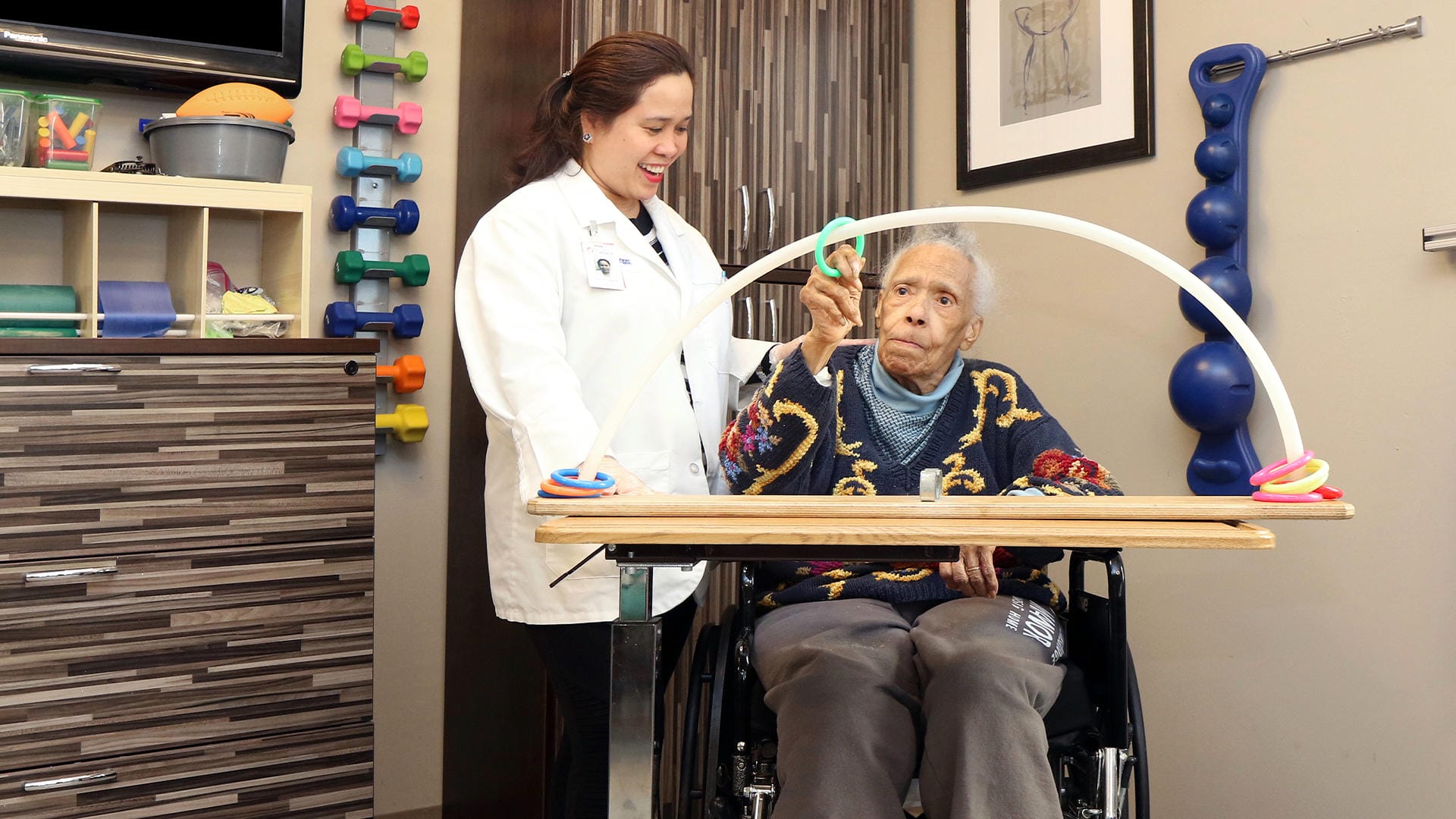
Practice may begin seated when trunk control is limited. Reaching, turning the head, shifting weight and returning to center give the therapist information. Standing sessions can add stepping in several directions or controlled turns. Guarding, footwear and the placement of a chair or rail are deliberate safety choices. A countertop is not automatically a substitute for a therapist’s setup.
Falls risk changes from one hour to the next. Poor sleep, distraction or carrying an object can expose a problem absent during a quiet morning session. Families often see that variation. Tell the care team.
Aerobic Activity During Stroke Rehabilitation Buffalo NY
The stationary pedals turn once, then stall. One leg is late; the weaker hand keeps sliding off the grip. Five minutes of that work is hardly a warm-up for the visitor watching. For the person in the seat, it may be the day’s hardest five minutes.
Recent guidance gives clinicians a common runway: begin around five minutes when appropriate, work toward 20 or longer, aim for three sessions weekly and continue for eight weeks or more. The exact route through those numbers varies. A FITT-VP plan asks six questions. How often? How hard? How long? What activity? How much total work? When should it progress?
A therapist checks the answers against pulse, blood pressure, symptoms and the Borg exertion rating. Speech can make the familiar conversation test unreliable after stroke. Now suppose the person’s face suddenly droops or the words become slurred. Exercise is finished and 911 comes next. Faintness, chest pressure or breathing that looks wrong also stops the session while medical help is sought.
Fatigue Has to Be Planned For
At ten o’clock the walk looks steady. By ten-twenty, the foot drags and the instructions no longer seem to stick. Ask enough people recovering from stroke and fatigue stops sounding like a side note. The 2025 recommendations put its reach above 50 percent. Some of those strokes were mild on paper.
The day may need rearranging. Put the hardest job in the person’s best hour. Split a longer chore. Rest before the crash. A pocket diary with three entries, time, activity and fatigue afterward, can expose a pattern quickly. Shower first, and perhaps therapy goes badly. A crowded visit may show up later as an unsteady evening walk.
An abrupt change deserves clinical attention. Poor sleep, pain, dehydration, infection or a medication effect may be adding to the load. “Push through” does not solve any of those. Leave enough energy to practice tomorrow.
Turning Therapy Into an Achievable Home Plan
Bedroom to kitchen, using the prescribed device, with one family member close by. Five rises from the firm dining chair. One turn each way before lunch. A list that specific has a chance of surviving discharge. “Walk more” generally does not. The treating team still decides how often and how much help.
Some rehearsal belongs in the house itself. Follow the likely route and the trouble spots appear: a loose rug, a dog crossing the hallway, dim light outside the bathroom. Buffalo weather will add wet leaves, early darkness and then ice. Better to choose an indoor route while the September sidewalk is still friendly.
The family member needs practice as well. Where should the helper stand? Is a steadying hand expected, or close supervision only? What change means the attempt ends? Grabbing the weaker arm is out. So is swapping in an untested cane because it happens to be nearby. Put the instructions on paper; a tired brain should not have to store the whole lecture.
Care. Support. Positive Outcomes. Centers Health Care.
Ellicott Center on Seventh Street in Buffalo provides Stroke Care and Short-Term Rehab, supported by Pain Management and Wound Care, along with Long-Term Care for people who need continued assistance. Goals differ. One person may be preparing to return home; another is working toward safer transfers, greater strength or a more comfortable daily routine. There will be gains, flat stretches and difficult days. Our staff stays with each patient or resident through all of them, because progress often arrives in inches before anyone can measure it in feet.
Steps to Home
Going home works better when the plan has already been rehearsed. Patients, families and therapists can choose a few essential routes, practice them with the exact device and level of help prescribed, write down rest points and decide whom to call if function slips. The first goal may be modest: bed to bathroom, chair to kitchen, front door to the waiting car. Do that safely and consistently. Then build from there.
Care. Support. Positive Outcomes. Centers Health Care.
Centers Health Care provides rehabilitation, skilled nursing and long-term care for people with a wide range of needs. Whether someone is recovering from surgery, managing an illness or simply needs more support than can be provided at home, our staff is there to help.
The goal is not exactly the same for everyone. It may be returning home, becoming stronger, staying independent or simply feeling better and more comfortable from one day to the next. There will be progress, setbacks and difficult days along the way. Our job is to be there through all of it, and to help each patient or resident get as far as he or she can.
Sometimes that progress comes in large steps. More often, it comes in small ones. Either way, every step matters.
Our Steps to Home series follows patients through rehabilitation and the journey from hospital to home: